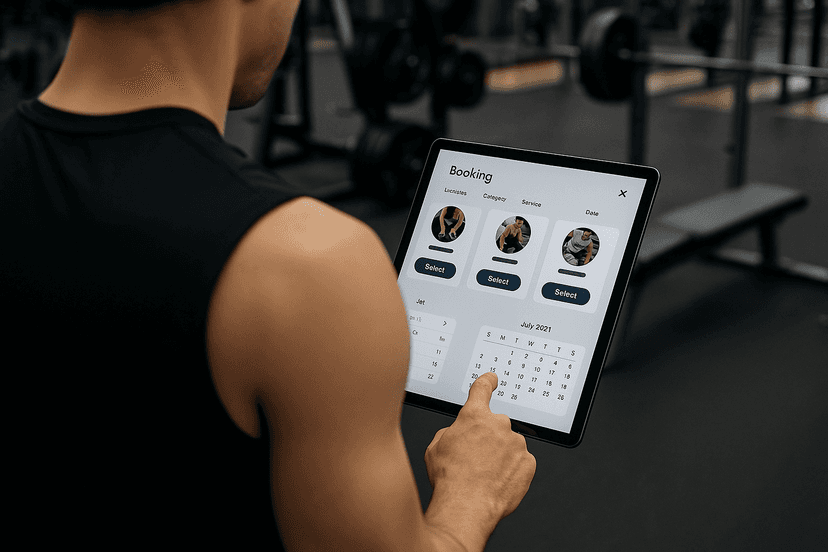
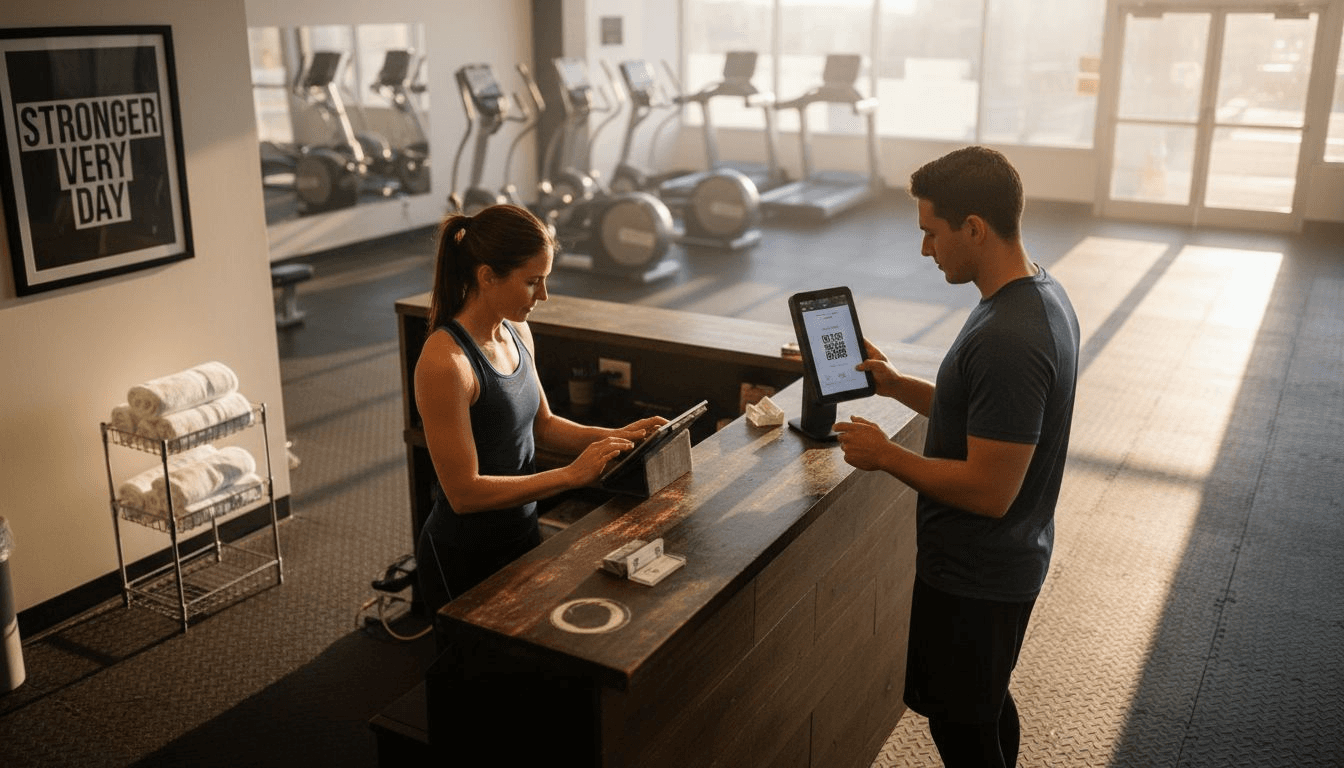
Digital transformation can boost gym revenue per user by 25%, yet many studio owners struggle to know where to start. This guide clarifies what digital transformation means for fitness studios in 2026, addresses common misconceptions, and provides practical steps to enhance revenue, operational efficiency, and member engagement through strategic technology adoption.
Table of Contents
- Understanding Digital Transformation In Fitness Studios
- Quantifying The Impact Of Digital Transformation
- Operational Automation Benefits
- Member Engagement And Retention Strategies
- Hybrid And Virtual Fitness Integration
- Common Misconceptions About Digital Transformation
- Implementing Digital Transformation: Steps And Best Practices
- Summary And Future Outlook
Key takeaways
| Point | Details |
|---|---|
| Revenue impact | Digital transformation increases revenue per user by 25% and member lifetime value by 28%. |
| Operational efficiency | Automation reduces costs by 18% and cuts no-shows by 29% through smart scheduling. |
| Member engagement | Personalized digital marketing boosts conversions by 31% and retention above 75%. |
| Hybrid models | Combining virtual and physical services expands membership reach by approximately 15%. |
| Implementation keys | Select integrated platforms, train staff thoroughly, and measure results continuously. |
Understanding digital transformation in fitness studios
Digital transformation integrates technology throughout your studio's operations and member touchpoints. It's not just installing software. It's rethinking how you run your business, engage members, and deliver value through digital tools.
Consumers expect personalized, seamless digital experiences in 2026. The global fitness industry continues record growth, making competition fiercer. Studios that embrace digital tools gain competitive advantages in retention, revenue, and operational speed.
Key components of digital transformation include:
- Software automation for scheduling, billing, and member communications
- Data analytics to personalize marketing and track member behavior
- Integrated mobile apps for member self-service and engagement
- Hybrid fitness ecosystems combining in-studio and virtual experiences
- Cloud-based platforms enabling real-time access to business metrics
Studio owners who delay adoption risk losing members to competitors offering modern, frictionless experiences. The market demands digital convenience, and transformation positions your business to meet those expectations while improving internal efficiency.
Quantifying the impact of digital transformation
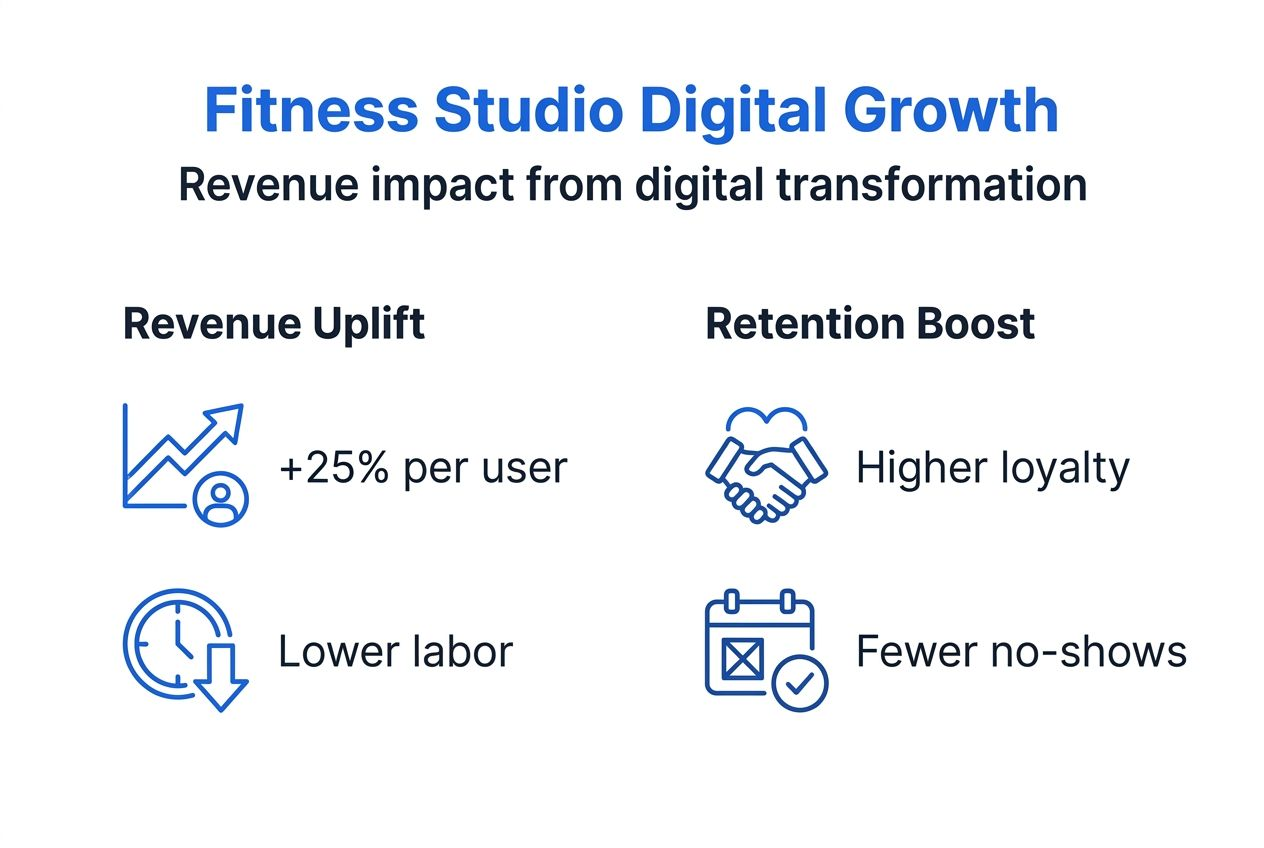
Hard data proves digital transformation delivers measurable financial returns. Studios implementing comprehensive digital strategies see revenue per user increase by 25%, directly impacting your bottom line without necessarily expanding physical space or hiring more staff.
Member lifetime value improves even more dramatically. Digital engagement platforms that personalize communication and track member progress boost lifetime value by 28%. This means each member generates significantly more revenue over their relationship with your studio.
Operational savings add another financial benefit. Automation reduces manual tasks, minimizes errors, and frees staff to focus on member experience rather than administrative work. The combined effect creates substantial ROI within the first year for most studios.
| Metric | Improvement | Impact |
|---|---|---|
| Revenue per user | +25% | Higher income without expanding capacity |
| Member lifetime value | +28% | Increased long-term profitability per member |
| Operational costs | -18% | Lower overhead through automation |
| Staff productivity | +24% | More time for member interaction |
| No-show rate | -29% | Predictable attendance and revenue |
You can model these improvements for your specific studio using tools like a gym management ROI calculator to project potential savings and revenue gains. Real studios document these results in detailed case studies showing software ROI, validating the statistics with actual implementation outcomes.
Digital transformation isn't a cost center. It's a revenue multiplier that pays for itself through improved retention, operational efficiency, and member satisfaction.
These digital transformation statistics come from aggregated industry research across hundreds of fitness businesses, providing reliable benchmarks for your planning.
Operational automation benefits
Automation eliminates repetitive manual tasks that drain staff time and create errors. Billing automation stands out as particularly valuable because billing errors cause significant member churn. Members leave when charged incorrectly, and automated systems prevent these friction points.

Scheduling automation transforms how studios manage classes and appointments. Digital scheduling tools improve staff productivity by 24%, allowing trainers and desk staff to focus on member interactions rather than calendar management. The software handles conflicts, capacity limits, and waitlists automatically.
No-shows damage revenue predictability and class planning. Automated reminders reduce no-shows by 29%, using text messages, app notifications, and emails to prompt members about upcoming sessions. This consistency stabilizes attendance and revenue.
Operational cost reduction averages 18% across mid-sized gyms adopting automation. These savings come from reduced administrative hours, fewer billing disputes, and streamlined communication workflows.
Key automation opportunities include:
- Automated membership billing with retry logic for failed payments
- Class booking and waitlist management without manual intervention
- Member check-in via QR codes or mobile apps
- Contract renewals with automated reminders and digital signatures
- Staff scheduling coordinated with class calendars
Pro Tip: Choose software solutions designed specifically for fitness studios rather than generic business software. Fitness-specific platforms include essential features for managers like class capacity tracking and member progress monitoring that generic tools lack.
The 2025 fitness industry outlook emphasizes automation as a top priority for studios seeking growth without proportional cost increases.
Member engagement and retention strategies
Personalized marketing converts prospects into members more effectively than generic outreach. Digital data analytics increase conversion rates by 31% by tailoring messages to individual interests, fitness goals, and engagement patterns. You can segment communications based on attendance frequency, class preferences, or milestone achievements.
Community programs drive retention when paired with digital engagement. Studios that combine strong community initiatives with digital tools see retention rates exceeding 75%. The digital layer reinforces in-person connections through member forums, achievement sharing, and event coordination.
Digital content diversifies revenue while deepening relationships. Recorded workout videos, nutrition guides, and wellness resources keep members engaged between studio visits. This continuous touchpoint strategy maintains awareness and value perception.
Effective member engagement strategies include:
- Personalized email campaigns triggered by member behavior and milestones
- Mobile app features for progress tracking and goal setting
- Private social groups for member interaction and support
- Exclusive digital content accessible only to members
- Birthday and anniversary recognition with special offers
Implementing a member engagement plan:
- Collect member data through intake forms and preference surveys.
- Segment your member base by goals, activity level, and engagement.
- Create automated marketing workflows targeting each segment.
- Deploy automated notifications for classes, achievements, and relevant content.
- Monitor engagement metrics and refine your approach monthly.
- Expand personalization as you gather more behavioral data.
Pro Tip: Use member data responsibly by securing proper consent and encrypting sensitive information. Transparency about data use builds trust that enhances rather than undermines personalization efforts.
Selecting the best fitness software solutions for your studio size ensures you have the engagement tools needed without paying for unnecessary complexity. Digital modernization in fitness requires balancing capability with usability.
Hybrid and virtual fitness integration
Hybrid fitness blends physical studio experiences with virtual access, creating flexible options that appeal to diverse member schedules and preferences. This model expands your reach beyond geographic constraints while maintaining the community feel of in-person training.
Virtual classes add members who might not commit to exclusively in-person attendance. The hybrid fitness market expects 23.1% annual growth through 2033, with virtual options increasing global membership by approximately 15%. These members often convert to full in-person participation over time.
Omnichannel ecosystems keep members engaged regardless of their physical location. Your studio becomes accessible from home, while traveling, or during busy periods when studio visits aren't practical. This accessibility reduces cancellations and maintains revenue continuity.
| Model | Member Engagement | Revenue Potential | Retention Rate |
|---|---|---|---|
| Physical Only | High intensity, limited reach | Constrained by capacity | 60-70% typical |
| Virtual Only | Lower intensity, broad reach | Scalable but lower per-member | 40-55% typical |
| Hybrid | High intensity, expanded reach | Maximized across channels | 75%+ achievable |
Benefits of hybrid integration:
- Revenue diversification through multiple service tiers
- Reduced member churn during travel or schedule changes
- Broader market reach without new physical locations
- Data collection across digital and physical touchpoints
- Competitive differentiation in crowded markets
Challenges to address:
- Technology requirements for quality video streaming
- Staff training to deliver engaging virtual experiences
- Pricing strategy balancing physical and virtual value
- Maintaining community feel across digital channels
Effective group fitness management software integrates virtual and physical class scheduling seamlessly. A comprehensive fitness scheduling app lets members book either format through one interface, simplifying their experience.
The hybrid fitness market analysis shows sustained growth driven by member demand for flexibility without sacrificing quality instruction.
Common misconceptions about digital transformation
Many studio owners delay transformation due to misunderstandings about what it requires and how it affects their business. Clarifying these misconceptions removes barriers to adoption.
-
Misconception: Digital transformation just means adding apps or gadgets. Correction: True transformation creates an integrated digital ecosystem extending member engagement beyond gym visits. It's strategic process redesign, not technology for its own sake.
-
Misconception: Automation depersonalizes the member experience. Correction: Properly implemented automation enhances personalization by enabling tailored communications at scale. You can send customized messages to hundreds of members based on their specific behaviors and goals, impossible to achieve manually.
-
Misconception: Digital transformation costs too much for small studios. Correction: Scalable SaaS platforms offer tiered pricing fitting studios of all sizes. Many solutions charge per member, so costs grow proportionally with revenue. Small studios access enterprise-level features affordably.
-
Misconception: Implementation requires extensive technical expertise. Correction: Modern fitness software prioritizes ease of use with guided setup, data migration assistance, and ongoing support. Most studios launch fully within two to four weeks.
-
Misconception: Members prefer human interaction and resist digital tools. Correction: Research shows members appreciate digital convenience for transactions and scheduling, freeing staff for meaningful personal interactions during workouts and training sessions.
Digital transformation is more than just new gadgets or apps. It requires creating connected ecosystems that extend member engagement beyond gym visits, building relationships that persist regardless of physical presence.
Understanding these realities helps you approach transformation strategically rather than viewing it as an intimidating technical project. The digital transformation misconceptions often stem from outdated information or experiences with poorly implemented systems.
Implementing digital transformation: steps and best practices
Successful implementation follows a structured approach that minimizes disruption while maximizing adoption and results.
-
Assess current workflows and pain points. Document how you currently handle scheduling, billing, member communications, and reporting. Identify specific frustrations and inefficiencies to prioritize solving.
-
Define clear business goals. Establish measurable targets such as reducing no-shows by 20%, increasing member retention to 75%, or cutting administrative hours by 30%. Goals guide platform selection and success measurement.
-
Evaluate and select integrated platforms. Compare fitness software solutions based on your studio size, budget, and feature priorities. Consider advanced features you'll grow into. Functional fitness gyms have unique needs requiring specialized tools.
-
Plan staff training and member communications. Develop training schedules ensuring every team member masters essential features before launch. Prepare member-facing materials explaining new processes and benefits. Address concerns proactively.
-
Implement tools incrementally with monitoring. Launch core features first, such as scheduling and billing, before adding advanced engagement tools. Monitor adoption rates, gather feedback, and adjust configurations. Measure progress against your defined goals monthly.
Pro Tip: Prioritize platform ease of use during selection. The best features deliver no value if staff won't use them. Request demos focusing on daily workflows, and involve front-desk staff in evaluation to ensure practical usability.
Reviewing fitness software alternatives helps you understand the range of approaches different platforms take. Some prioritize automation, others emphasize member engagement, and the best balance both aligned with your priorities.
Summary and future outlook
Digital transformation delivers quantifiable improvements in revenue, retention, and operational efficiency for fitness studios willing to embrace strategic technology adoption. The 25% revenue increase per user and 28% member lifetime value improvement represent substantial financial impact justifying investment.
Personalization and member-centric design remain critical as the industry evolves. Studios that use data to create tailored experiences while maintaining authentic human connections will outperform competitors relying solely on generic approaches.
Emerging technologies will define the next phase of fitness digital transformation. AI and wearables integration promises even deeper personalization through real-time biometric feedback and adaptive programming. Predictive analytics will identify churn risk before members disengage, enabling proactive retention interventions.
Key trends shaping the future:
- AI-powered coaching providing personalized workout recommendations
- Wearable device integration for comprehensive health tracking
- Advanced analytics predicting member behavior and preferences
- Augmented reality enhancing virtual training experiences
- Blockchain-based membership and credential management
Staying current with fitness technology trends ensures your studio remains competitive as member expectations evolve. Digital transformation isn't a one-time project but an ongoing commitment to improvement and innovation.
The studios thriving in 2026 and beyond combine operational excellence with authentic community building, using technology to enhance rather than replace human connection.
Unlock your fitness studio's potential with FineGym software
FineGym provides the comprehensive gym management software platform needed to implement every digital transformation strategy outlined in this guide. Our integrated solution combines automated billing, intelligent scheduling, member engagement notifications, and analytics in one easy-to-use system.
Studio owners choose FineGym because we understand fitness business operations. Our platform features include everything from QR code check-ins to mobile member apps, designed specifically for gyms, CrossFit boxes, and fitness studios of all sizes. Setup takes weeks, not months, with dedicated migration support ensuring smooth transitions from legacy systems.
Whether you run a boutique studio or multi-location franchise, FineGym scales with your business while keeping costs predictable through flexible tiered pricing. Explore our solutions and get started for free to see how we help studios like yours improve retention, increase revenue, and streamline operations.
Frequently asked questions
What is digital transformation in fitness studios?
Digital transformation integrates technology throughout your studio's operations and member touchpoints to improve efficiency and engagement. It encompasses automated billing and scheduling, data-driven marketing, mobile member apps, and hybrid fitness offerings. The goal is creating seamless digital experiences that complement your physical services while reducing manual administrative work.
How long does it take to see ROI from digital transformation?
Most studios observe measurable improvements within three to six months of implementing comprehensive management software. Initial gains appear in reduced no-shows and billing errors within weeks. Revenue and retention improvements accumulate over six to twelve months as personalized engagement strategies mature and member lifetime value increases. Full ROI typically occurs within the first year.
Can small studios afford digital transformation solutions?
Yes, modern SaaS platforms offer tiered pricing that scales with studio size and member count. Small studios access enterprise features through affordable monthly subscriptions, often costing less than hiring additional administrative staff. The operational savings and revenue improvements quickly offset software costs, making transformation financially viable for studios of all sizes.
What are the best features to look for in fitness management software?
Prioritize integrated solutions combining automated billing with recurring payment handling, intelligent class scheduling with capacity management, member mobile apps for self-service, automated communications for reminders and marketing, and comprehensive analytics dashboards. Ensure the platform supports your specific studio type, whether traditional gym, CrossFit box, or boutique fitness. Ease of use for both staff and members determines actual adoption and value.
How does digital transformation improve member retention?
Digital tools enable personalized engagement at scale, sending tailored content and offers based on individual member behavior and preferences. Automated reminders reduce no-shows, maintaining workout consistency that drives results and satisfaction. Hybrid offerings provide flexibility that prevents cancellations during schedule disruptions. Community features in mobile apps extend relationships beyond physical visits. Combined, these elements create stronger member connections and loyalty.
Recommended
- Software Solutions for Fitness Studios: Management... - Finegym
- Fitness Business Growth Workflow: 30% Revenue... - Finegym
- Gym management trends 2026: 30% less admin work... - Finegym
- Evolution of Gym Software 2026: Transforming... - Finegym
- BIOHACKING CONFERENCE - THE NEW ERA OF HEALTH - Brainwellness