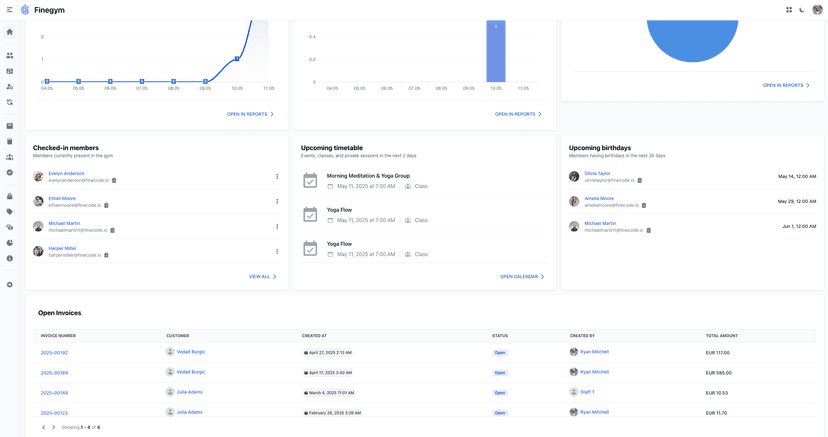

SaaS gym management software has transformed how fitness businesses operate, cutting administrative workload by up to 30% for 79% of gyms. Cloud-based platforms eliminate manual billing errors, streamline staff scheduling, and enable real-time data access from any device. By automating routine tasks and enhancing member engagement through personalized communication, SaaS solutions free gym owners to focus on growth and retention instead of paperwork.
Table of Contents
- Introduction To SaaS In Gym Management
- How SaaS Automates And Streamlines Gym Operations
- Enhancing Member Engagement And Retention With SaaS
- Supporting Hybrid And Modern Fitness Business Models
- Common Misconceptions About SaaS For Gyms
- Practical Considerations And Implementation Tips
- Conclusion: Maximizing Gym Success With SaaS
- Explore FineGym's All-In-One SaaS Gym Solutions
- Frequently Asked Questions
Key takeaways
| Point | Details |
|---|---|
| Administrative efficiency | SaaS platforms reduce gym admin workload by 30%, improving scheduling accuracy by 40% and cutting payroll errors by 35%. |
| Member retention boost | AI-driven personalization increases retention by 20% through tailored workout plans and automated engagement strategies. |
| Hybrid model support | 35% of gyms use SaaS to manage flexible scheduling for both in-person and virtual fitness offerings seamlessly. |
| Accessible pricing | Tiered pricing models make SaaS affordable for gyms of all sizes, from boutique studios to large franchises. |
| Rapid implementation | Vendor support and training resources enable onboarding in days to weeks, minimizing transition complexity. |
Introduction to SaaS in gym management
SaaS (Software as a Service) refers to cloud-hosted software accessed via the internet without local installations or server maintenance. For gym owners, this means running member management, billing, scheduling, and communications from any device with an internet connection. The shift to SaaS addresses persistent pain points: manual billing that leads to payment errors, scheduling conflicts from paper calendars or spreadsheets, and fragmented systems that don't talk to each other.
Before SaaS adoption, gyms often juggled multiple disconnected tools for different tasks. One system handled membership sign-ups, another managed class bookings, and yet another processed payments. This fragmentation wasted time and created data silos. Staff spent hours reconciling information across platforms, leaving less time for member interactions and strategic planning.
The fitness industry has embraced SaaS rapidly over the past few years. Gyms demand automation and flexibility to compete in a market where member expectations continue rising. Advanced SaaS platforms provide AI-driven personalization, adapting workout and marketing plans to individual member data, enhancing engagement and retention. This innovation sets modern gym management software solutions apart from legacy systems.
Key drivers of SaaS adoption include:
- Automation: Eliminates repetitive tasks like payment reminders and class confirmations
- Centralization: Consolidates all gym operations into one unified platform
- Scalability: Grows with your business from single location to franchise network
- Real-time insights: Delivers instant access to performance metrics and member data
The result is a fundamental shift in how gyms operate. Rather than spending hours on administrative tasks, owners and managers leverage group fitness software to focus on delivering exceptional member experiences and driving business growth.
How SaaS automates and streamlines gym operations
Automation stands as the most transformative benefit SaaS brings to gym management. Automated billing systems process recurring payments without manual intervention, eliminating human errors that plague manual invoicing. Members receive payment confirmations instantly, and gyms see faster collections with fewer disputes. When payments fail, automated retry logic and notifications keep cash flow steady.
Staff scheduling becomes dramatically simpler with SaaS platforms. Instead of juggling availability spreadsheets and making countless phone calls, managers assign shifts in minutes. The system tracks certifications, flags conflicts, and notifies staff of schedule changes automatically. Research shows 30% reduction in administrative workload reported by 79% of gyms, with 40% improvement in staff scheduling and 35% reduction in payroll errors.

Real-time multi-device access changes how gym operators work. Check member details from your phone while on the gym floor, approve class bookings from a tablet at the front desk, or review financial reports from home on your laptop. Information updates instantly across all devices, ensuring everyone works with current data.
| Metric | Pre-SaaS | Post-SaaS | Improvement |
|---|---|---|---|
| Admin hours per week | 25 hours | 17.5 hours | 30% reduction |
| Scheduling accuracy | 60% | 84% | 40% improvement |
| Payroll errors per month | 6 errors | 4 errors | 35% reduction |
| Billing dispute rate | 8% | 3% | 62.5% reduction |
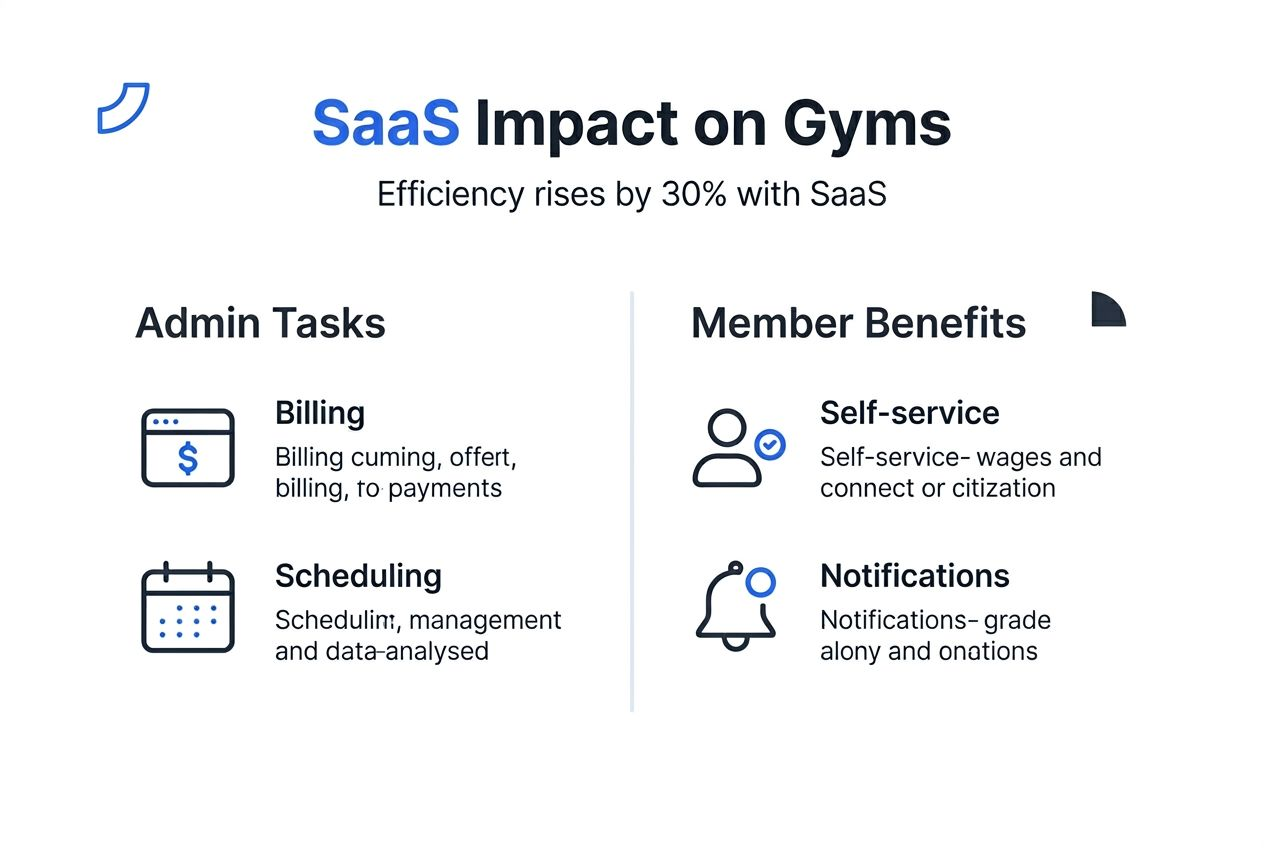
Operational benefits extend beyond time savings. SaaS platforms provide audit trails showing who changed what and when, improving accountability. Automated backups protect data without manual intervention. Security updates deploy automatically, keeping member information safe without IT expertise.
Pro Tip: Choose a SaaS platform with a robust mobile app so you can manage critical tasks on the go, whether approving membership freezes during your commute or checking class attendance from anywhere.
The efficiency gains compound over time. Staff freed from repetitive tasks redirect energy toward member service and retention initiatives. Gym staff management software transforms operational workflows, creating a more productive and focused team.
Enhancing member engagement and retention with SaaS
Personalized communication powered by SaaS platforms dramatically improves member relationships. Instead of generic mass emails, gyms send targeted messages based on member behavior, preferences, and goals. A member who attends yoga classes regularly receives promotions for meditation workshops, not powerlifting seminars. This relevance increases engagement and makes members feel understood.
Member self-service apps revolutionize convenience. Members book classes, modify reservations, update payment methods, and check in via QR codes without staff assistance. This 24/7 accessibility matches modern consumer expectations shaped by Amazon and Uber. When members control their experience, satisfaction rises and front desk bottlenecks disappear.
Automated billing and notifications reduce friction points that cause member churn. Late payment reminders go out automatically before accounts become delinquent. Class reminder notifications reduce no-shows. Birthday messages with special offers make members feel valued. These touchpoints maintain consistent communication without overwhelming staff.
Data shows the impact: AI-driven personalization boosting repeat visits by 15%, with 20% increase in retention via data-driven engagement. When gyms identify patterns like declining visit frequency, they intervene proactively with re-engagement campaigns before members cancel.
Key engagement features include:
- Behavior-triggered messaging: Automated emails based on attendance patterns or milestone achievements
- In-app challenges: Gamified fitness goals that foster community and accountability
- Progress tracking: Visual dashboards showing member advancement toward personal targets
- Social features: Community boards and class leaderboards that build connections
Pro Tip: Use SaaS analytics to segment members by risk level. Flag those with declining attendance or payment issues, then reach out personally with tailored retention offers before they disengage completely.
Effective member management requires understanding individual member journeys. SaaS platforms capture every interaction, purchase, and class attendance, creating comprehensive member profiles. This data empowers gyms to deliver personalized experiences at scale, something impossible with manual systems.
Supporting hybrid and modern fitness business models
Hybrid fitness models blending in-person and virtual offerings have become standard in 2026. SaaS platforms enable this flexibility through integrated scheduling systems that accommodate both physical classes and digital content. Members choose between attending a spin class at the gym or streaming a HIIT workout at home, all through one interface.
Approximately 35% of gyms use SaaS to facilitate hybrid models combining physical and digital workouts. This flexibility meets members where they are, adapting to travel schedules, weather constraints, or personal preferences. A member traveling for work maintains their fitness routine through virtual classes, preserving engagement and reducing cancellation risk.
Mobile apps provide seamless access to live and on-demand virtual fitness content. Members stream workouts directly to their phones or tablets, participate in live virtual classes with real-time instructor feedback, and access extensive exercise libraries. The same app handles class bookings, payments, and progress tracking, creating a unified experience.
Flexible scheduling adapts to modern lifestyle demands. Members book classes minutes before they start or schedule sessions weeks in advance. Waitlist automation fills cancellations instantly. Class capacity adjustments accommodate fluctuating demand. This operational flexibility would overwhelm manual systems but runs smoothly with SaaS automation.
Benefits of SaaS-enabled hybrid models:
- Revenue diversification: Virtual memberships create new income streams beyond physical capacity limits
- Geographic expansion: Reach members anywhere without opening new physical locations
- Weather resilience: Maintain engagement during seasonal slowdowns or extreme weather
- Trial accessibility: Prospects sample virtual classes before committing to in-person memberships
Hybrid model support proves crucial for business scalability. Multi-location gym management becomes feasible when one system handles varied offerings across different sites. Franchises standardize operations while allowing location-specific customization, balancing consistency with local market needs.
Common misconceptions about SaaS for gyms
Many gym owners hesitate to adopt SaaS based on misconceptions that don't reflect current reality. Addressing these myths removes barriers to transformation.
Myth: SaaS is only for large gyms with big budgets. Reality: Tiered pricing makes SaaS accessible for all gym sizes, from solo trainers to international franchises. Small studios pay only for features they need, then scale up as they grow. Entry-level plans often cost less than hiring part-time administrative help.
Myth: SaaS implementation is too complex and time-consuming. Reality: Strong vendor support and comprehensive tutorials ease onboarding. Most platforms offer data migration assistance, staff training, and dedicated implementation specialists. Tiered pricing makes SaaS accessible for all gym sizes, with onboarding support reducing transition complexity and scaling from small studios to franchises.
Myth: SaaS leads to losing the personal touch with members. Reality: SaaS enhances personalized communication by providing data insights impossible to gather manually. Automated systems free staff to spend more time on high-value member interactions rather than paperwork. The technology enables personalization at scale.
Myth: Cloud-based systems are less secure than local servers. Reality: Enterprise SaaS providers invest millions in security infrastructure exceeding what individual gyms can afford. Encryption, redundant backups, and security certifications protect data better than local systems vulnerable to hardware failure or theft.
Key advantages that counter misconceptions:
- Flexible contracts: Monthly subscriptions allow gyms to test platforms without long-term commitments
- No hardware costs: Eliminate server purchases, maintenance, and IT staffing expenses
- Automatic updates: New features and security patches deploy without gym involvement
- Vendor expertise: Leverage provider knowledge and best practices refined across thousands of gyms
"Proper onboarding support transforms SaaS adoption from a technical challenge into a strategic advantage. Vendors who invest in customer success create partnerships that drive long-term gym prosperity beyond software functionality."
Implementing gym management software requires planning but not technical expertise. Focus on choosing the right partner and communicating transparently with staff about changes.
Practical considerations and implementation tips
Successful SaaS adoption follows a structured approach that minimizes disruption while maximizing benefits.
-
Evaluate pain points before shopping. List specific operational challenges you want to solve: billing errors, scheduling conflicts, poor member communication, or limited reporting. Prioritize features addressing your biggest frustrations rather than choosing platforms with the most features.
-
Select platforms with appropriate tier options. Match pricing tiers to your current gym size and anticipated growth trajectory. Look for flexibility to upgrade seamlessly as membership expands. Avoid paying for enterprise features you won't use for years.
-
Plan data migration carefully. Export complete member records, billing history, and class schedules from existing systems. Create secure backups before migration begins. Work with vendor support to map old data fields to new platform structure, ensuring nothing gets lost in translation.
-
Schedule comprehensive staff training. Allocate time for hands-on training sessions covering common tasks each role performs. Provide documentation and video tutorials for ongoing reference. Designate power users who can answer colleague questions after initial training ends.
-
Implement in phases with feedback loops. Roll out core features like member check-ins first, then add billing automation, followed by advanced features like marketing automation. Gather staff and member feedback at each phase, adjusting configurations before proceeding. Typical onboarding ranges from several days to weeks depending on gym size, with vendor support alleviating challenges.
-
Monitor adoption metrics and adjust. Track staff utilization rates, member app downloads, and automated process completion rates. Identify bottlenecks or confusion points quickly. Schedule follow-up training sessions addressing specific challenges rather than generic overviews.
-
Establish data backup and security protocols. Verify automatic backup frequency and test data restoration procedures. Configure user permissions limiting access to sensitive information. Enable two-factor authentication for administrative accounts.
-
Leverage vendor resources proactively. Attend vendor webinars showcasing best practices and new features. Join user communities to learn from peers solving similar challenges. Schedule periodic check-ins with account managers to optimize configurations as your gym evolves.
Gym software implementation tips emphasize patience and communication. Staff resistance often stems from fear of change rather than actual system limitations. Demonstrate quick wins early to build confidence and momentum.
Conclusion: Maximizing gym success with SaaS
SaaS platforms fundamentally transform gym operations by automating administrative tasks, enhancing member engagement, and enabling flexible business models. The 30% reduction in administrative workload frees owners to focus on strategic growth rather than daily paperwork. Personalized communication powered by AI-driven insights boosts retention by 20%, directly impacting bottom-line profitability.
Hybrid fitness models supported by SaaS technology meet modern member expectations for flexibility and convenience. Cloud-based access and mobile apps create seamless experiences across in-person and virtual touchpoints. Tiered pricing ensures accessibility for gyms of all sizes, from boutique studios to international franchises.
Data-driven decision making replaces guesswork when SaaS platforms deliver real-time insights into member behavior, financial performance, and operational efficiency. Gyms identify trends early, intervene proactively with at-risk members, and optimize resource allocation based on evidence rather than intuition.
The competitive advantage SaaS provides continues growing as platforms evolve. Gyms embracing these solutions position themselves for sustained success in an increasingly digital fitness landscape.
Explore FineGym's all-in-one SaaS gym solutions
Ready to experience the operational efficiency and member engagement benefits discussed throughout this guide? FineGym offers a comprehensive SaaS platform covering automated billing, intelligent scheduling, and personalized member communications in one unified system. Whether you operate a single boutique studio or manage a multi-location franchise, FineGym's flexible features adapt to your specific needs.
Our gym management software solution streamlines daily operations while our fitness scheduling app eliminates booking conflicts and maximizes class utilization. Member engagement soars with automated gym notifications that keep your community connected and motivated. Robust onboarding support and responsive customer service ensure smooth transitions, helping you realize SaaS benefits quickly without technical headaches. Explore FineGym today and discover how the right platform transforms gym management from overwhelming to effortless.
Frequently asked questions
What is SaaS and how does it benefit gyms?
SaaS stands for Software as a Service, which means cloud-based software accessed through the internet without local installation or server maintenance. For gyms, this translates to automated billing, simplified scheduling, centralized member data, and real-time access from any device. The primary benefits include reduced administrative workload, improved staff efficiency, enhanced member engagement through personalized communication, and scalable operations that grow with your business.
Can small gyms afford SaaS platforms?
Yes, tiered pricing models ensure affordability for gyms of all sizes, including small boutique studios and independent trainers. Entry-level plans typically include core features like member management, scheduling, and basic billing automation at costs comparable to part-time administrative help. As your gym grows, you scale up to plans with advanced features like marketing automation and multi-location management, paying only for what you need at each stage.
How long does it take to implement SaaS solutions in a gym?
Implementation timelines range from several days to weeks depending on gym size, data complexity, and feature scope. Boutique studios with straightforward needs often go live within a week, while larger multi-location operations require more extensive data migration and staff training. Strong vendor support, comprehensive training resources, and phased rollout approaches significantly reduce complexity and accelerate adoption.
How does SaaS support hybrid fitness business models?
SaaS platforms enable hybrid models by integrating in-person and virtual offerings within one system. Members book physical classes or access on-demand digital content through the same mobile app. Flexible scheduling accommodates both live gym sessions and virtual workouts, while unified billing handles different membership tiers seamlessly. This integration maintains consistent member experiences across all touchpoints, whether they work out at your facility or stream classes remotely.