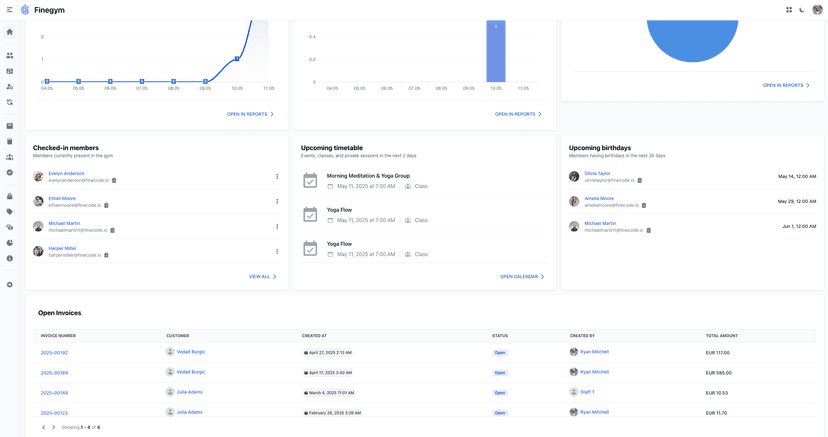

A trigger driven, five touch cadence built on identity reconciliation and sub one hour first contact recovers more abandoned gym signups than any discount or generic reminder blast. Studios that orchestrate booking, marketing, and in app follow up as one connected flow have recovered roughly 8 to 12 percentage points of early churn cohorts. A single platform can run this entire sequence end to end, from the first missed confirmation to the coach's save.
TL;DR:
- Respond to abandoned signups within one hour using automated SMS and email confirmations to capitalize on the first 24-hour window before leads go cold.
- Track day-3 booking rates daily and set stop rules to optimize the cadence and prevent sequence fatigue, especially for studios with fewer than 40 trial leads monthly.
- Ensure webhook reliability, deduplicate contacts accurately, and log all actions to avoid silent data loss that can skew recovery metrics.
- Use context-aware, personalized messages referencing specific class interests or objections for higher response and conversion rates.
- Segment leads based on drop-off point, origin, interest, and value to tailor recovery tactics effectively and escalate high-value inquiries to human staff sooner.
Table of Contents
- What Is the Fastest Way to Recover an Abandoned Signup?
- How Do You Build the Technical Backbone Without Duplicate Records?
- What Should Recovery Messages Actually Say?
- When Should a Human Take Over the Recovery?
- Which Metrics Actually Prove the Program Is Working?
- How Should You Segment Leads for Better Recovery Results?
- How Do You A/B Test Recovery Messages Without Wasting the Pilot Window?
- Why Do Personalized Nudges Convert Better Than Generic Reminders?
- What Compliance Risks Go Beyond SMS Opt-In?
- Author's Perspective: Prioritized Fixes and Common Traps to Avoid
- How Can Finegym Run This Recovery Flow for You?
- Sources
What Is the Fastest Way to Recover an Abandoned Signup?
Speed decides more of this outcome than message quality does. Most fitness leads go cold within the first 24 hours, which means your recovery clock starts the moment someone closes a signup tab, not the next morning when staff check the dashboard. A 14 to 30 day pilot is enough to prove whether your studio can close this gap.
Here is the order that matters, starting with what pays off fastest:
- Cut time-to-first-contact to under one hour. Fire an automated confirmation SMS and email the instant a signup stalls, even before a human looks at it.
- Launch the multi-touch sequence immediately. Day 0 confirmation, Day 1 staff task, Day 3 slot suggestion, Day 5 open-ended check-in, Day 7 counter-offer.
- Define stop rules before you launch anything. Every sequence needs a hard exit after a reply, a booking, or three unanswered touches.
- Track day-3 booking rate daily during the pilot. This single number tells you faster than any other metric whether the cadence is working.
- Hold off on complex integrations until the basics run clean. Get confirmation and Day 3 messaging solid first; add coach-task routing and CRM syncing once those hold steady.
Quick wins live in steps one and two. Steps four and five take longer to build but protect the program once volume grows. Studios running fewer than 40 trial leads a month can often manage this manually before automating anything, since volume below that range rarely justifies the setup cost.
Pro Tip: Run your pilot on trial signups only for the first two weeks. It is the highest-volume, lowest-risk category to test your cadence before you touch full membership contracts.
How Do You Build the Technical Backbone Without Duplicate Records?
The mechanics behind a recovery flow matter as much as the messaging, because a broken webhook or a duplicate contact record will quietly wreck your numbers before you notice. Your system needs to listen for booking and membership events in real time, then decide within seconds whether that event belongs to a lead already in your sequence or a brand new one.
- Listen for webhooks, not polling. Booking and membership platforms should push events to you the instant they happen, not wait for a scheduled sync.
- Dedupe on email plus a phone hash inside a short matching window. This catches the person who signs up twice from a phone and a laptop within minutes.
- Use a fuzzy-match guardrail with a manual merge queue. Automatic matching handles obvious duplicates; anything uncertain routes to a human before it corrupts your reporting.
- Retry failed webhooks with exponential backoff for up to 72 hours. A dropped event should not mean a lost lead.
- Log every action to an audit trail keyed by a correlation ID. When a message goes out at the wrong time, you need to trace exactly which trigger fired it.
One implementation detail causes more damage than any other: canceling queued automated touches. That cancellation must happen inside the same database transaction that writes the membership contract. Split those two operations apart and you get race conditions where a new member receives a "come back and finish signing up" text five minutes after paying.
Identity drift, webhook failures, and missing audit logs are the three most common failure points in gym automation builds, ahead of any messaging or content problem. Fix identity reconciliation before you touch anything else.
What Should Recovery Messages Actually Say?
Generic discount blasts feel like the obvious move and they underperform badly. Context-aware messages that reference a lead's actual history outperform them because they give the person a specific reason to respond, not just a reason to feel guilty about a missed deal.
The cadence itself follows a fixed rhythm:
- Day 0: Confirmation via SMS and email within minutes of the abandoned step, no personalization needed yet.
- Day 1: A human check-in or staff task, not another automated message. This is where a real person notices the drop-off.
- Day 3: A slot-suggestion nudge with a one-click booking link tied to the exact class or time they viewed.
- Day 5: An open-ended listening message ("Anything holding you back?") routed through intent detection to catch objections early.
- Day 7: A tailored counter-offer based on whatever objection surfaced.
- Day 10 to 14: One low-pressure win-back attempt, then archive the lead.
Message content should reference the specific class, the coach they browsed, or the question they asked during signup, pulled from stored context rather than written fresh each time. Day 3 and Day 5 touches carry the highest ROI in this sequence, so if you can only build two automated touches well, build those.
Consent rules are not optional add-ons. US SMS messaging falls under TCPA, which requires explicit opt-in before you text anyone, and any additional channel beyond what the signup form covered needs its own consent. STOP requests need immediate, automatic handling, and most programs should default to a three-touch stop rule if a lead never replies at all.
Pro Tip: Map detected objections to specific counter-offers instead of a blanket discount. A schedule conflict gets an off-peak class suggestion. Price hesitation gets a family-plan mention. A vague "not sure yet" gets a coach introduction, not a coupon.
When Should a Human Take Over the Recovery?
Automation should hand off to a person the moment a lead shows real engagement, not just when the sequence ends. Three triggers should always escalate: a reply to any message, a clearly detected objection, or a lead who fits your high-lifetime-value profile based on membership tier interest.
- Confirm the objection in plain language. The coach's first message should restate what the person said, not launch into a pitch.
- Propose one specific next step. A single class time or a five-minute call beats an open-ended "let me know if you have questions."
- Lock the coach assignment for 48 hours. Nobody else on staff should touch that lead while the coach works it.
While a human owns the case, suppress every automated counter-offer tied to that lead. Log the outcome, saved, lost, or still pending, back into the automation store so reporting stays accurate and the sequence doesn't accidentally restart.
Which Metrics Actually Prove the Program Is Working?
Five numbers tell you almost everything: time-to-first-contact (target under one hour), no-show recovery rate, day-3 booking rate, touch-to-close ratio, and your stalled-lead count. Watch these weekly during a pilot, not monthly.
- Time-to-first-contact: anything over one hour signals a broken trigger or a staffing gap.
- No-show recovery rate: the share of no-shows who eventually book a second time.
- Day-3 booking rate: the single best early indicator of cadence health.
- Touch-to-close ratio: how many messages it typically takes to convert one lead.
- Stalled-lead count: leads sitting in the sequence with no reply and no exit, a sign your stop rules need tightening.
Set alerts for webhook failures and sudden spikes in duplicate-record rate, since both quietly erode data quality before anyone notices a drop in bookings. The 8 to 12 percentage-point recovery figure cited earlier came from studios that hit these benchmarks consistently, not from the messaging alone.
How Should You Segment Leads for Better Recovery Results?
Not every abandoned signup deserves the same cadence. A trial pass abandoned two clicks from checkout carries different intent than a membership inquiry that stalled at the pricing page, and treating them identically wastes your best touches on the wrong audience.
Segment first by drop-off point. Someone who abandoned at payment has already decided to join; they need a friction fix, not a persuasion campaign. Someone who abandoned at the class-schedule step is still evaluating fit, so a Day 3 slot-suggestion nudge matters more for them than for the payment group.
Segment second by channel origin. A lead who came through a corporate wellness partnership behaves differently than one who signed up from a walk-in flyer, and your messaging tone should reflect that context.
Segment third by declared interest. Someone who selected a specific class type or coach during signup gives you a personalization hook the generic form doesn't. Use it in the Day 3 and Day 5 messages instead of defaulting to a studio-wide announcement.
Finally, segment by lead value. A prospect inquiring about a family membership or a corporate program justifies a faster human escalation than a single drop-in trial. Route your highest-value segments to the coach's save process sooner, even if their engagement signals look identical to a lower-value lead on paper. Precise segmentation is what keeps a five-touch cadence from feeling like five identical touches to five very different people.

How Do You A/B Test Recovery Messages Without Wasting the Pilot Window?
Test one variable at a time, and test it on the touch that carries the most volume, usually Day 0 or Day 3. Running five simultaneous variants across a 14 day pilot with limited lead volume produces noise, not answers.
Start with subject line and send time for the Day 0 confirmation, since this touch has the highest open rate and the clearest signal. Once you have a winner, move to testing the Day 3 message format: a direct slot-suggestion link versus an open question that routes to a staff reply. The day-3 and day-5 touches already carry the highest ROI in most sequences, which makes them worth the testing investment before you optimize anything downstream.
Measure against day-3 booking rate and touch-to-close ratio, not opens or clicks alone. A message that gets opened but never booked is not a win. Give each test at least two full weekly cycles before calling a result, since gym signup behavior shifts noticeably between weekday and weekend cohorts.
Resist testing discount depth as your primary variable. Context-aware personalization consistently beats generic discount blasts, so the more valuable test is usually message framing, not price.
Why Do Personalized Nudges Convert Better Than Generic Reminders?
People respond to signals that someone specific is paying attention to their specific situation. A message that says "we noticed you were checking out our 6am strength class with Coach Maria" works because it proves a real record exists, not because it uses a friendlier tone.
Three behavioral triggers do most of the work here. Loss aversion kicks in when a message references something the lead already invested time in, like a class they browsed or a question they submitted, framing the follow-up as picking back up rather than starting over. Social proof matters at the Day 5 to Day 7 stage, where a brief mention of a class's typical attendance or a coach's specialty gives a hesitant lead a low-pressure signal that others already made this choice. Commitment consistency explains why a one-click booking link converts better than a generic "book now" button: the lead already selected that specific class or time during their original signup attempt, and the deep link honors that earlier micro-commitment instead of asking them to start the decision over.
None of these triggers require aggressive language. The strongest recovery messages read like a helpful nudge from someone who remembers the conversation, not a marketing campaign.
What Compliance Risks Go Beyond SMS Opt-In?
Consent for texting is the obvious rule. Data privacy handling around abandoned signup information gets overlooked far more often, and it carries real risk.
Any personal data collected during an incomplete signup, name, phone number, payment attempt details, health or fitness goals entered on an intake form, is still personal data even though the person never finished registering. Store it with the same access controls you apply to full member records, not in a looser "leads" spreadsheet that staff can export freely.
Retention limits matter too. A lead who never converts and never responds to your win-back sequence should not sit in your system indefinitely. Set a clear archive or deletion policy, typically 90 to 180 days after the final touch, and document it.
Watch for scope creep in how the data gets used. Information collected for signup recovery should not quietly feed into unrelated marketing lists without a separate consent basis. Studios that operate corporate wellness programs face extra scrutiny here, since employee data often carries additional handling obligations depending on the employer agreement.
The other quiet risk is over-collection at the form itself. Every extra field on a signup form increases abandonment, and every extra field you collect also becomes another data point you're responsible for protecting. Cutting form fields helps conversion and reduces your compliance footprint at the same time.

Author's Perspective: Prioritized Fixes and Common Traps to Avoid
The studios that struggle with this aren't failing at messaging, they're failing at plumbing. Identity drift, webhook deafness, and a missing audit trail cause more lost signups than a weak Day 7 offer ever will, because a broken pipe means the perfect message never gets sent at all.
Fix speed before you fix cleverness. A studio with a boring but reliable sub one hour confirmation and a solid Day 3 nudge will outperform one with elaborate segmentation running on a flaky webhook. Run your pilot for a full 14 to 30 days before judging it, since early data swings wildly on small lead volume. Small studios under roughly 40 trial leads a month should build the manual version first, get the cadence right by hand, and automate once the pattern is proven rather than guessing at scale from day one.
— Vedad
How Can Finegym Run This Recovery Flow for You?
Some gym management platforms are built to run exactly this flow without stitching together separate tools for scheduling, messaging, and reporting. Where a manual setup asks you to manage webhooks, deduping, and audit logs across multiple systems, an integrated solution can handle identity reconciliation, one-click booking deep links, and coach-task routing inside a single platform to help prevent issues with missed webhooks or duplicate contact records.
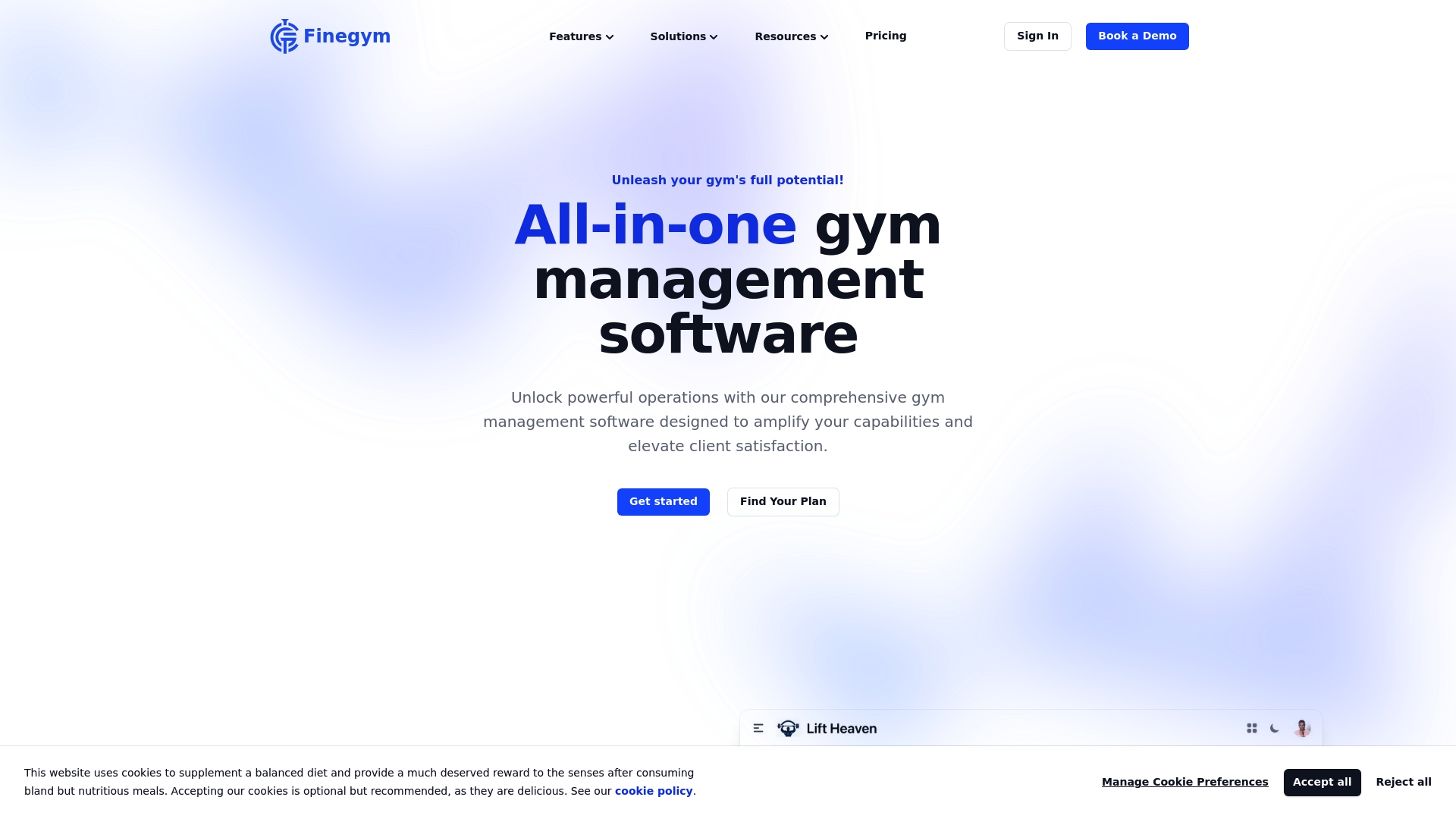
Look for a few non-negotiable capabilities in any platform you consider: automated notifications that fire within minutes of an abandoned step, reliable webhook listeners, identity reconciliation with a manual merge queue, deep links that drop a lead straight into a specific class slot, an audit trail keyed to each action, and reporting that surfaces day-3 booking rate without a manual export. Finegym's engaging notification tools cover the messaging side, while its group fitness scheduling features handle the one-click booking links a Day 3 nudge depends on.
If you run trial classes specifically, the platform's class scheduling tools plug directly into the same automation layer, so a no-show or an abandoned booking triggers the same reconciliation logic without a separate integration. Start with a free gym management pilot or explore the full gym management platform to see how a 14 to 30 day trial of this recovery flow would look for your studio.
Sources
For the technical integration patterns behind this playbook, see the Mindbody, Mailchimp, and Trainerize automation guide and conversion optimization tactics from Babylove Growth. Explore Finegym's membership management features to see how tracking fits into a broader platform.
- Automate Gym Onboarding: Mindbody + Mailchimp + Trainerize
- Gym Lead Reactivation: A Real Process, Not a Discount Blast — Nutripy
- Gym Signup Forms: Design Tips 2026