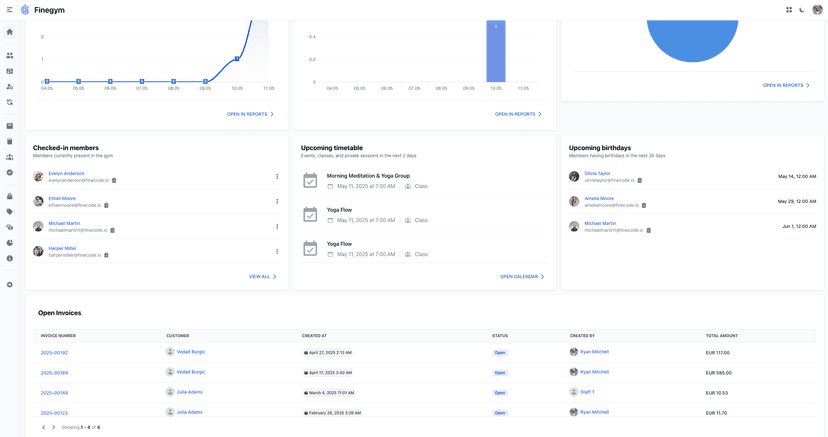
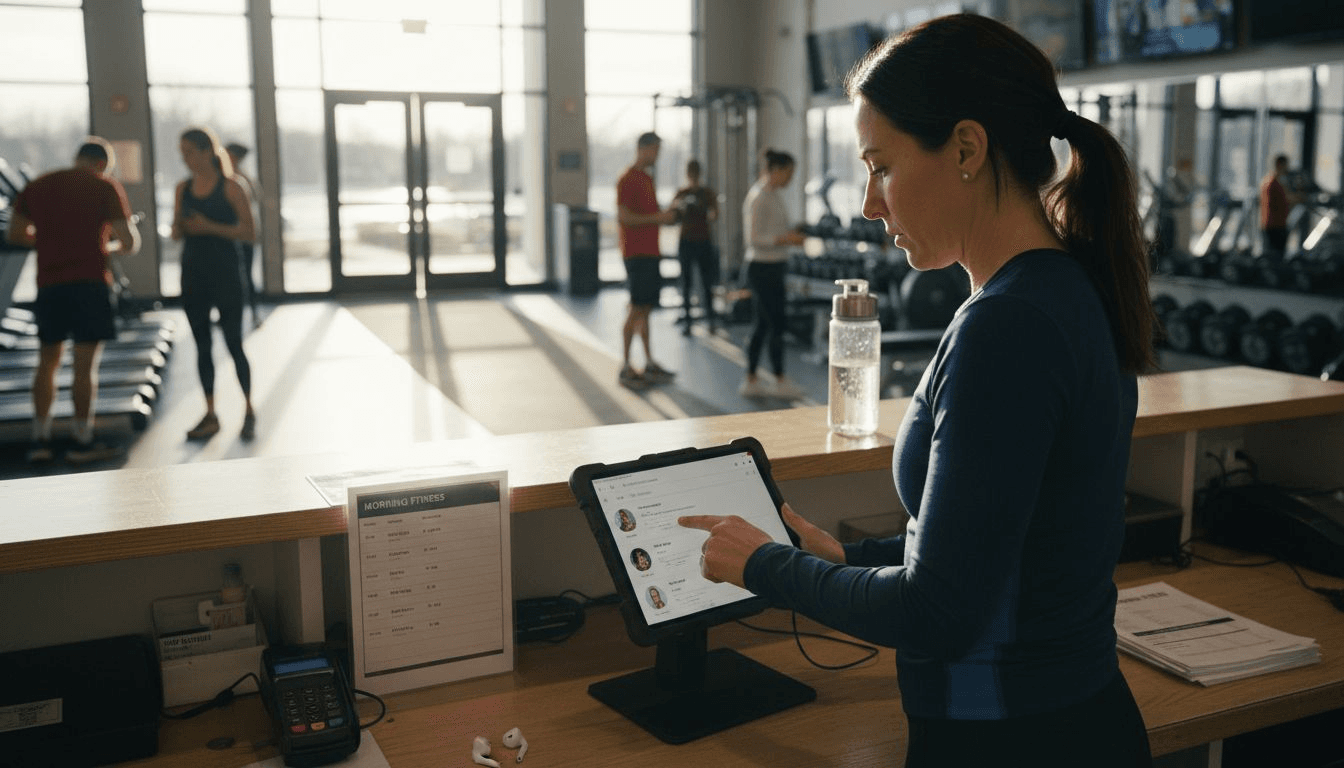
Managing a busy fitness studio in North America often means endless paperwork and late-night admin tasks that drain your energy. Modern gyms need cloud-based fitness management to stay efficient and deliver the seamless experience members expect. With secure, real-time data syncing across devices, plus integration with wearables like Apple Health and Fitbit, these platforms help you cut manual work, boost member satisfaction, and keep your business running smoothly when it matters most.
Table of Contents
- Cloud-based Fitness Management Essentials
- Major Types And Key Platform Distinctions
- How Cloud Solutions Streamline Gym Operations
- Impact On Member Engagement And Retention
- Risks, Costs, And Comparison With Alternatives
Key Takeaways
| Point | Details |
|---|---|
| Cloud-based management is essential. | It enables real-time data synchronization and access from anywhere, enhancing operational efficiency and member engagement. |
| Member engagement boosts retention. | Personalized experiences and mobile app access lead to higher retention rates by making members feel valued. |
| Automation reduces administrative burden. | Cloud solutions eliminate manual processes, allowing staff to focus on member interaction and relationship building. |
| Choosing the right platform is crucial. | Evaluate platforms based on specific operational needs; consider real-time synchronization and ease of use to enhance productivity. |
Cloud-based fitness management essentials
Cloud-based fitness management is no longer optional for gyms and studios. It's the foundation that keeps your operation running smoothly while you focus on member success.
At its core, cloud-based fitness management means storing your gym's data—member profiles, billing records, class schedules, attendance—on secure servers accessible from anywhere. Your data syncs in real-time across devices, so changes made at the front desk instantly appear on your mobile app and staff tablets.
Here's why this matters for your business:
- Real-time data synchronization: Member check-ins, class cancellations, and billing updates happen instantly across all systems
- Access from anywhere: Manage your gym from the office, home, or during a site visit to another location
- Automatic backups: Your data is protected against hardware failures or accidental deletions
- Scalability: Add new locations, staff, or members without outgrowing your system
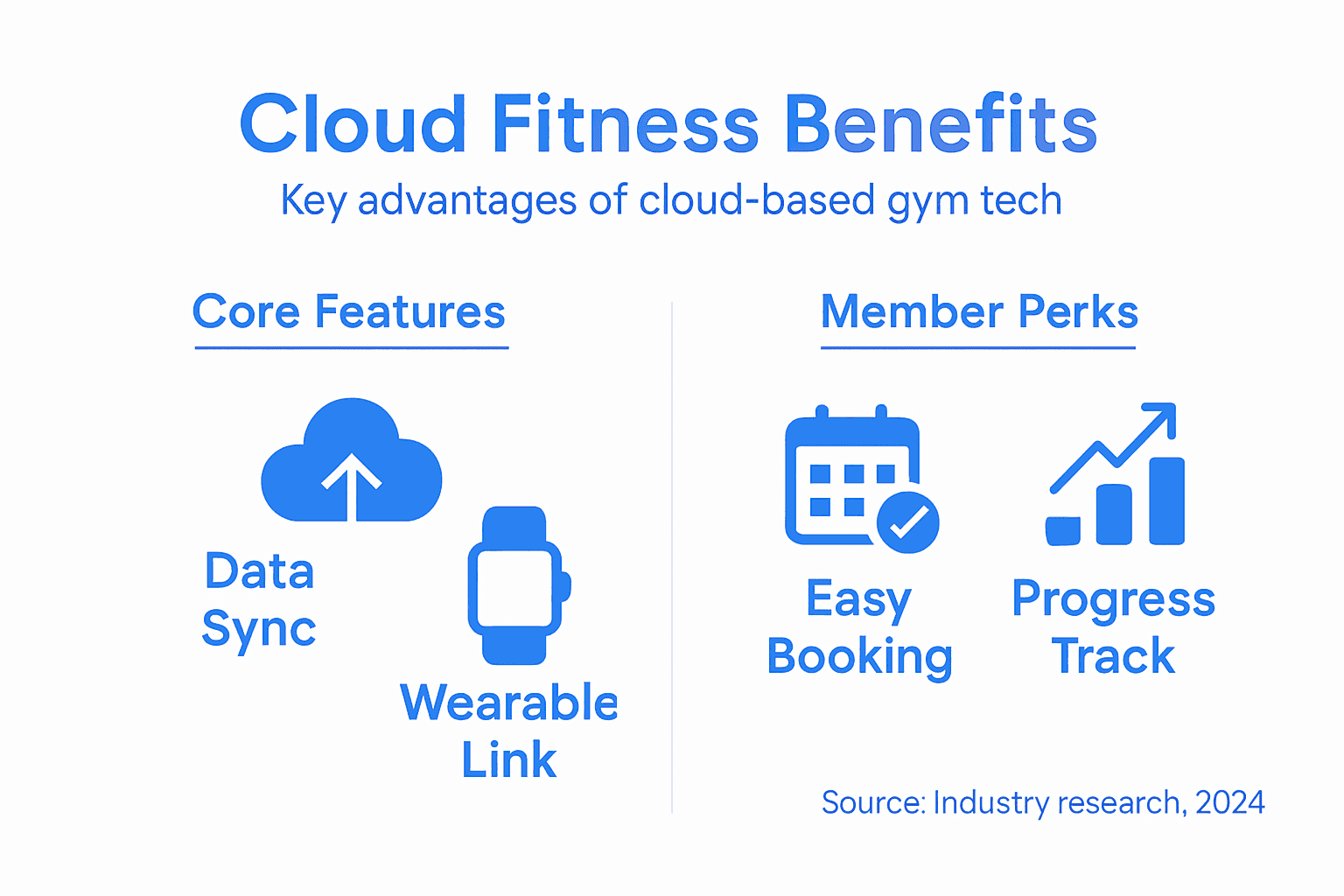
- Integration capabilities: Connect with wearable devices, payment processors, and marketing tools seamlessly
Cloud-based platforms enable the storage and management of fitness data through synchronized wearable devices, creating opportunities to enhance member engagement with health monitoring and personalized insights. This real-time synchronization capability transforms how you interact with members and understand their fitness journeys.
Your members expect convenience. They want to book classes from their phones, view their billing history, and track their progress without calling the gym. Cloud-based systems deliver exactly that experience. The mobile accessibility alone drives higher retention rates because members stay engaged between visits.
Beyond member-facing features, the operational benefits are substantial. Staff spend less time on manual data entry and paper shuffling. Billing errors drop significantly when everything's automated. Class scheduling becomes conflict-free with centralized management. Financial reports generate instantly instead of requiring hours of spreadsheet work.
The infrastructure is also critical. Your data lives on secured servers with multiple redundancy, so your gym's operations never stop due to a single computer failure. Automatic backups mean you can recover from almost any mishap.
Cloud-based systems reduce the gap between what your gym can offer and what modern members demand—creating loyalty through convenience and reliability.
Most small to mid-sized gyms find that cloud-based management saves 5-10 hours per week on administrative tasks. That's time your team can spend on member interaction, class programming, or sales.
Pro tip: When evaluating a cloud fitness platform, prioritize real-time synchronization capabilities and mobile app functionality—these two features directly impact member retention and staff efficiency more than any other single factor.
Major types and key platform distinctions
Not all fitness management platforms are created equal. The differences between them can make or break your gym's efficiency and growth potential.
All-in-one platforms bundle everything into a single system. You get member management, class scheduling, billing, staff tools, and member apps in one integrated package. This approach eliminates data silos and reduces the complexity of managing multiple vendor relationships.
Specialized platforms focus on specific niches. Some target boutique studios with advanced class scheduling features. Others specialize in personal training gyms with detailed client progress tracking. Still others focus on corporate wellness programs or CrossFit boxes with competition-specific features.
Cloud-based fitness software solutions vary widely in specialization for different business sizes and feature scope, serving everything from large multi-location franchises to independent trainers working solo. Understanding these distinctions helps you choose what actually fits your operation.
Key platform differences include:
- User interface complexity: Simple drag-and-drop interfaces versus feature-rich dashboards with advanced customization
- Integration breadth: Basic payment processing only versus connections with wearables, marketing tools, and medical software
- Scalability: Built for single-location studios versus designed for franchise networks with hundreds of locations
- Pricing model: Per-member pricing, flat monthly fees, or tiered packages based on location count
- Training and support: Self-service knowledge bases versus dedicated account managers and onboarding
Small studio platforms typically emphasize ease of use and lower cost. They handle core functions without overwhelming new users. Perfect if you're running 20-50 members and want simplicity.
Mid-market platforms add advanced features like automated marketing, detailed performance analytics, and multi-location management. These suit gyms with 200-2,000 members across one or multiple locations.
Enterprise solutions offer unlimited customization, dedicated support teams, and integration capabilities for large franchise networks. These come with higher costs but maximum flexibility.
Here's a side-by-side look at popular fitness management system types and their suitability for different gym sizes:
| Platform Type | Ideal Gym Size | Key Strength | Cost Structure |
|---|---|---|---|
| All-in-one | Small to large | Full suite, minimal setup | Tiered monthly plans |
| Specialized | Boutique/specialist | Niche features, customization | Custom or flat fee |
| Enterprise | Franchise/large chain | Unlimited scalability | Annual contracts |
| Hybrid Spreadsheet | Solo or micro-gyms | Low upfront cost | Staff time investment |
The best platform for your gym isn't the one with the most features—it's the one that solves your specific operational pain points without overwhelming your team.
Your choice determines how much time staff spend on admin versus member interaction. It affects how quickly you can onboard new members. It influences whether you can operate multiple locations efficiently. Choose wrong, and you'll waste time fighting the software instead of using it.
Pro tip: Test at least three platforms with your actual workflows before deciding—run a class scheduling scenario, process a member cancellation, and generate a revenue report to see which interface your team actually prefers to use daily.
How cloud solutions streamline gym operations
Manual gym operations are expensive, error-prone, and time-consuming. Cloud solutions eliminate these problems by centralizing everything on one platform your entire team can access instantly.
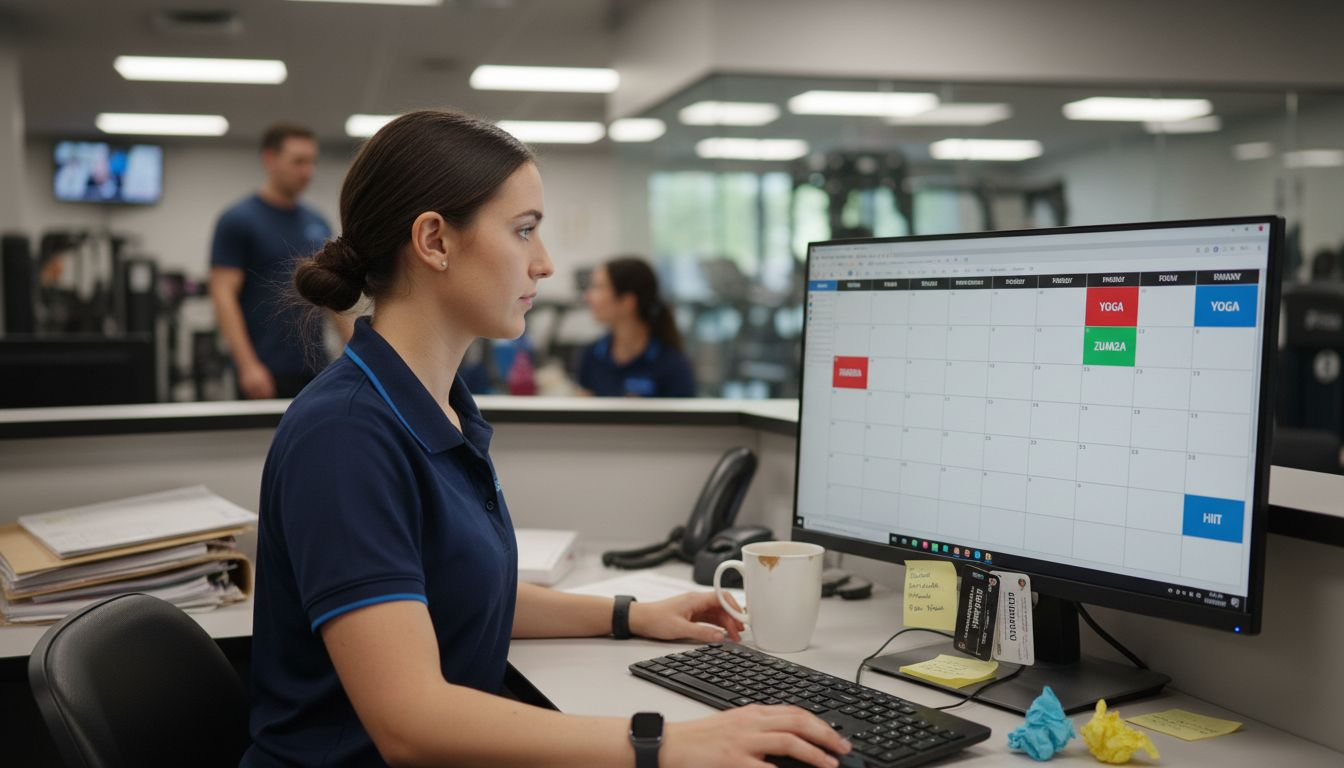
Consider what happens without cloud software. Your front desk staff manually enters member data into spreadsheets. Billing reminders go out via email or phone calls. Class schedules exist in multiple places—printed on the wall, in someone's email, on scattered documents. When a member cancels, updating all these systems takes hours and still produces errors.
Automation of recurring payments and real-time updates through cloud software centralize billing, membership, and operations on one accessible platform, transforming how your gym operates from the ground up. This single change eliminates duplicate data entry and manual follow-ups.
Here's what actually changes when you switch to cloud-based management:
- Billing runs automatically: Recurring payments process without staff intervention, reducing late payments and administrative overhead
- Scheduling conflicts disappear: Real-time updates prevent double-bookings and overlapping classes across locations
- Member onboarding accelerates: New members self-serve through mobile apps instead of sitting at the front desk completing forms
- Staff access information instantly: Any team member can pull up a member's history, billing status, or attendance without waiting for a file
- Reports generate on demand: Revenue reports, attendance trends, and member analytics appear in seconds instead of requiring manual calculations
Your front desk staff moves from data entry to genuine member interaction. Instead of spending 20 minutes updating member records after each visit, they spend that time building relationships and selling personal training sessions.
The operational fluidity improves dramatically. Hybrid service delivery—in-person and digital—becomes seamless. Members can book classes online, cancel without calling, and access their data anytime from their phones. Your team manages everything from one dashboard instead of juggling separate systems.
Cloud solutions don't just reduce admin work—they shift your team's focus from paperwork to member retention and revenue growth.
Multi-location gyms see the biggest gains. Updates to class schedules, billing changes, or staff assignments sync instantly across all locations. A manager at one branch can see real-time performance metrics for every other location without waiting for reports.
The financial impact compounds over time. Fewer billing errors means more revenue collected. Lower staff overhead on admin tasks means more capacity for member-facing activities. Faster member onboarding means higher closing rates on sign-ups.
Pro tip: When implementing cloud software, invest two weeks in staff training before going live—teams that understand the system fully capture 40% more operational efficiency in the first month than those who learn as they go.
Impact on member engagement and retention
Member retention is your gym's most valuable metric. It costs five times more to acquire a new member than to keep an existing one. Cloud-based systems directly impact both engagement and loyalty.
When members feel connected to your gym, they show up consistently. Cloud solutions create that connection by delivering personalized experiences at scale. Instead of generic class schedules, members get recommendations based on their attendance history and fitness preferences.
Real-time performance feedback and data-driven workout experiences through fitness technology significantly enhance member engagement, extending exercise opportunities beyond the gym itself. Members who track progress digitally stay motivated between visits, which directly translates to higher retention rates.
Here's how cloud platforms boost engagement:
- Personalized communication: Members receive messages about classes matching their interests, not generic "come to the gym" emails
- Progress tracking: Members see their fitness data in real-time through mobile apps, creating accountability and motivation
- Flexible access: On-demand digital classes keep members engaged when they can't visit in person
- Community features: Members connect with each other, building loyalty beyond just the workout itself
- Proactive outreach: Your team identifies at-risk members before they cancel, intervening with retention offers
Cloud-based systems enable tracking of member attendance, satisfaction, and engagement data to identify at-risk members early and implement retention strategies, turning data into actionable retention plans. You're no longer guessing which members might leave—you have concrete metrics.
Retention improvements are measurable. Gyms using cloud platforms with engagement features report 15-25% higher retention rates compared to those relying on manual follow-up. Members feel seen and valued when your team remembers their preferences and progress.
The mobile app is your retention superpower. Members who use the app consistently show 40% higher retention than those who don't. They book classes, check in, view their progress, and engage with your community—all within one interface.
Technology alone doesn't retain members. It's technology balanced with genuine human connection that creates unstoppable loyalty.
Automated messaging keeps members engaged without overwhelming your team. Birthday discounts, "come back" campaigns for inactive members, and class reminders all run on schedule. Your staff focuses on building relationships instead of sending emails.
Multi-location gyms gain a significant advantage. Members can attend any location seamlessly, and your team sees cross-location attendance patterns. This flexibility dramatically improves retention for busy professionals.
Pro tip: Set up automated engagement campaigns for specific member segments—new members get onboarding tips, inactive members get reactivation offers, and loyal members get VIP perks—each segment responding better to tailored messaging than blanket communications.
Risks, costs, and comparison with alternatives
Cloud-based fitness management isn't risk-free. Understanding the tradeoffs helps you make an informed decision for your gym.
The primary concerns are real but manageable. Data security is the biggest worry—member information, billing records, and payment details live on cloud servers. Reputable platforms use encryption and comply with industry standards, but breaches happen in any connected system. Internet dependency is another factor; if your connection drops, certain functions become unavailable. Ongoing costs also matter; you're paying monthly or annually rather than owning software outright.
Cloud-based fitness platforms involve data security vulnerabilities, internet connection dependency, and continual platform updates, though they reduce upfront hardware investment compared to on-premise systems. The cost difference matters significantly when comparing to traditional alternatives.
Let's break down the actual costs:
- Cloud platforms: $50-500 per month depending on member count and features; no upfront hardware costs
- On-premise systems: $5,000-30,000 initial investment for servers and software; ongoing maintenance and IT staff costs
- Hybrid spreadsheet approach: Minimal software costs but enormous time investment; hidden costs in staff inefficiency
- Multiple vendor systems: Lowest per-tool cost but highest integration headaches and staff training demands
For a small studio with 200 members, cloud software costs roughly $2,400-6,000 annually. An on-premise system costs $8,000-15,000 upfront, plus $2,000-5,000 yearly for maintenance and upgrades. Cloud wins on cost within 12-24 months for most gyms.
Below is a quick reference comparing cloud platforms to traditional alternatives based on efficiency, risk, and financial factors:
| Solution Type | Efficiency Gain | Main Risk | Upfront/Recurring Cost |
|---|---|---|---|
| Cloud-based | High (real-time) | Data security | Low/up to $500 monthly |
| On-premise | Medium | Hardware failure | $8,000+ upfront |
| Multiple vendors | Low | Integration issues | Varies per tool |
| Spreadsheet/manual | None | Manual error | Hidden time costs |
The internet dependency risk is often overstated. Most cloud platforms include mobile apps that function offline, syncing data when connection returns. Your staff can check members in, process payments, and manage schedules even during outages.
Data security requires vendor diligence. Verify that your platform provider uses encryption, complies with PCI DSS standards for payment processing, and conducts regular security audits. Ask for their security documentation before signing.
The real risk isn't cloud technology itself—it's choosing an unreliable vendor or ignoring security protocols during setup.
Multiple vendor systems look cheaper until you calculate integration time and staff confusion. Spreadsheets look free until you measure the 15 hours per week your front desk spends on manual data entry. On-premise systems look attractive until your server crashes and you lose a weekend rebuilding it.
Cloud platforms offer better scalability. Adding a second location costs nothing extra; on-premise systems require duplicate hardware investment.
Pro tip: Before committing to any platform, run a 14-day free trial with your actual workflows—process a real member cancellation, handle a billing issue, and schedule a week of classes to test reliability and ease of use in your real-world scenario.
Elevate Your Gym Operations with FineGym
If you are ready to overcome the challenges of managing complex gym operations, like manual scheduling conflicts or inefficient billing processes, FineGym offers the streamlined solution tailored for fitness businesses. This all-in-one platform addresses the key pain points highlighted in the article such as real-time synchronization, automated billing, and mobile member engagement to reduce administrative workload while boosting client retention.
FineGym.io combines member management, class scheduling, payment automation, and marketing tools under one intuitive interface designed to save you time and engage members through personalized experiences. With features like QR code check-ins and mobile apps, FineGym empowers you to keep all your data secure and accessible whenever and wherever you need it.
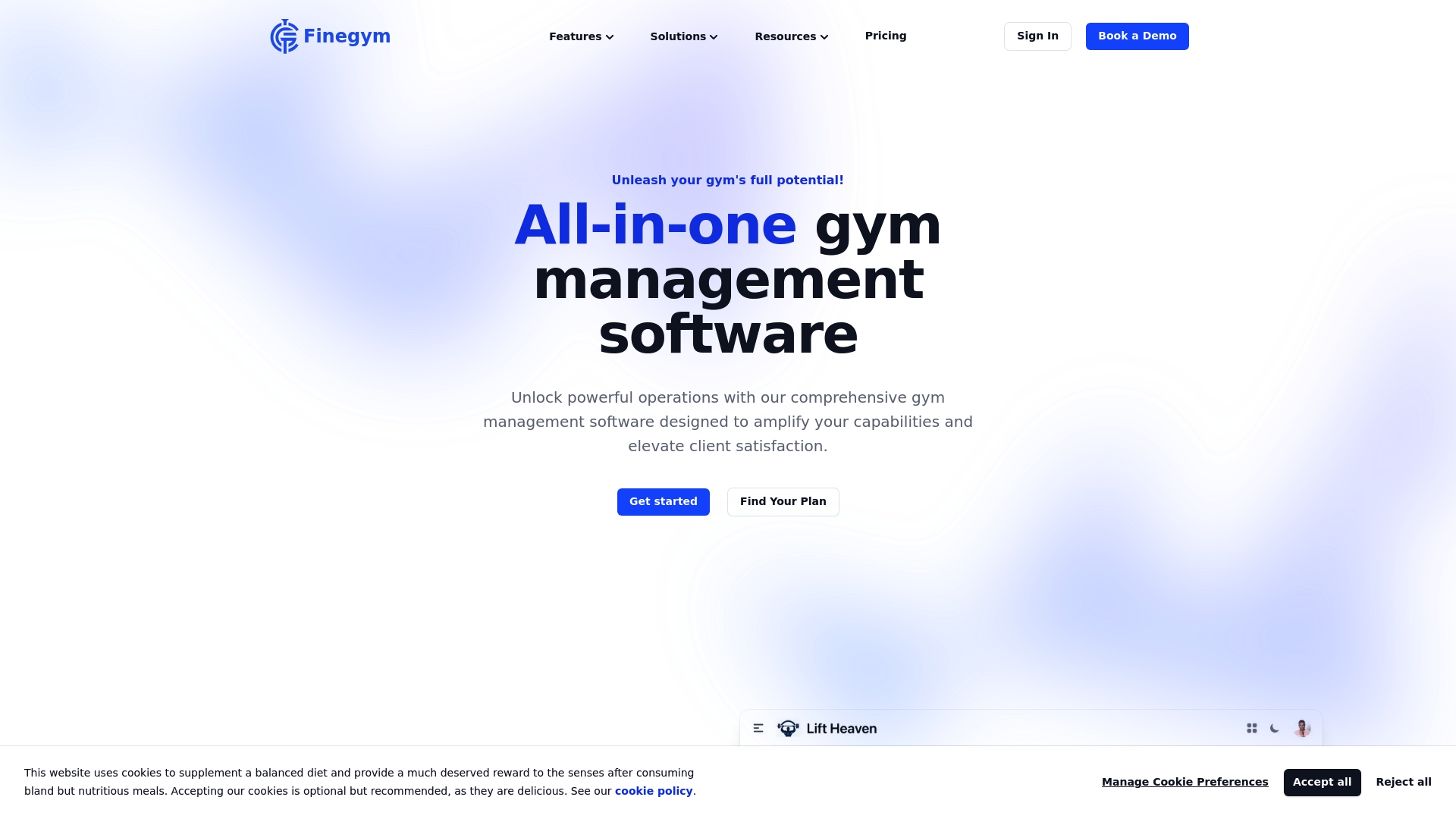
Take the next step to transform your gym operations today by exploring how FineGym’s cloud-based platform can help your fitness business grow and retain more members. Visit FineGym.io now and experience firsthand the ease of setup, seamless data migration, and flexible pricing designed for gyms of all sizes. Start your free trial and see how your team can spend less time on paperwork and more time building lasting member relationships.
Frequently Asked Questions
How does cloud-based fitness management improve gym operations?
Cloud-based fitness management centralizes data and automates administrative tasks, reducing manual errors and saving time. This allows staff to focus more on member engagement and sales, improving overall operational efficiency.
What are the key benefits of using cloud-based fitness management software?
Key benefits include real-time data synchronization, automatic backups, accessibility from anywhere, scalability, and seamless integration with other tools and devices, enhancing both member and staff experiences.
How can cloud-based systems enhance member engagement?
Cloud-based systems provide personalized communication, real-time progress tracking, and flexible access to classes. These features create a more connected experience, encouraging members to stay engaged and loyal to the gym.
What should I consider when choosing a cloud-based fitness management platform?
When choosing a platform, consider its user interface complexity, integration capabilities, scalability, pricing model, and the level of training and support offered. Testing multiple platforms with your actual workflows is also recommended.