
Gym owners face a persistent challenge: pricing strategies that fail to balance revenue goals with member retention. Setting membership fees too high drives away potential clients, while pricing too low leaves money on the table and undervalues your services. In 2026, optimizing your gym pricing strategy is no longer optional for sustainable growth. This guide walks you through actionable steps to refine your pricing model, leverage integrated management solutions, and create flexible packages that boost both revenue and member satisfaction.
Table of Contents
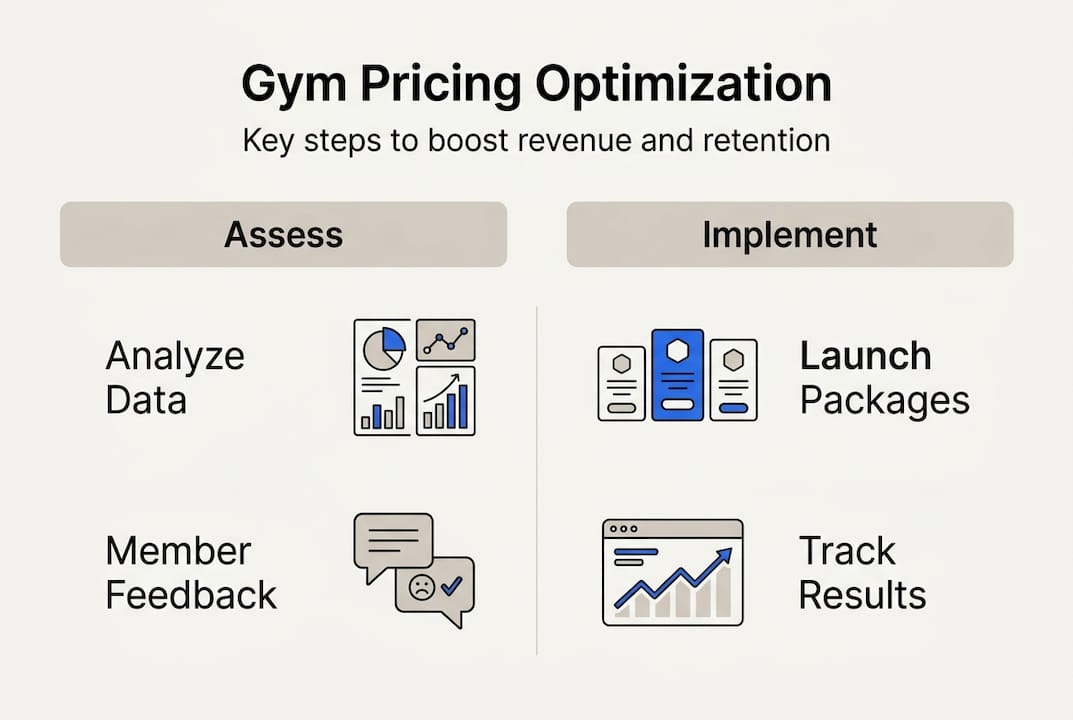
- Assessing Your Current Pricing Model And Setting Goals
- Designing Flexible And Competitive Pricing Packages
- Implementing Pricing With Integrated Gym Management Software
- Monitoring Results And Optimizing Pricing Over Time
- How Finegym Can Help Optimize Your Gym Pricing Strategy
Key takeaways
| Point | Details |
|---|---|
| Balance revenue and retention | Effective gym pricing aligns business growth targets with member value perception and loyalty |
| Flexible membership models | Offering diverse subscription options and clear communication increases customer satisfaction and reduces churn |
| Leverage management software | Integrated platforms streamline pricing execution, automate billing, and provide actionable data insights |
| Monitor and iterate | Continuous tracking of key metrics and member feedback enables data driven pricing adjustments over time |
Assessing your current pricing model and setting goals
Before you can optimize pricing, you need a clear picture of where you stand today. Many gym owners operate with inherited pricing structures that no longer align with market conditions or business objectives. Start by conducting a thorough audit of every membership package, billing cycle, and fee structure currently in place. Document each offering's price point, included services, contract length, and payment terms.
Next, identify friction points that may be driving members away or limiting revenue. Hidden fees and confusing pricing create distrust and dissatisfaction among members. Look for enrollment fees, cancellation penalties, locker charges, or class booking fees that aren't clearly communicated upfront. These hidden costs often trigger negative reviews and high churn rates, even when your base membership price is competitive.
With your current state mapped, establish specific, measurable goals for your pricing optimization effort. Define what success looks like: Is it a 15% increase in average revenue per member? A 20% reduction in churn rate over six months? Expanding your member base by 100 new sign ups? Clear targets guide every decision you make moving forward. Benchmark your performance against local competitors to understand where you stand in the market.
Pro Tip: Involve your front desk staff and trainers in the assessment process. They interact with members daily and hear firsthand complaints about pricing confusion or requests for different package options. Their insights reveal gaps your spreadsheets might miss.
Gather quantitative data from your current billing system and qualitative feedback through member surveys or exit interviews. Ask departing members specifically about pricing as a factor in their decision to leave. This combination of hard numbers and human perspective creates a complete foundation for strategic pricing changes.
Designing flexible and competitive pricing packages
Once you understand your baseline and goals, design pricing packages that meet diverse member needs while maintaining competitive positioning. The fitness market in 2026 demands flexibility. Members want options that fit their schedules, budgets, and commitment levels. A one size fits all monthly membership no longer cuts it.
Compare the most popular pricing structures and determine which combinations work for your facility:
- Monthly subscriptions with no long term commitment for flexibility seekers
- Annual memberships at discounted rates for committed members
- Pay per visit or class packs for casual users
- Premium tiers with personal training sessions included
- Family packages with discounts for multiple household members
Consider adding value through strategic bundling. Group fitness classes, nutrition coaching, locker rentals, and guest passes can differentiate your packages without dramatically increasing costs. Flexible membership options cater to wider preferences and boost retention by letting members choose what fits their lifestyle.
Seasonal promotions create urgency and attract new members during traditionally slow periods. A New Year resolution special or summer body challenge with limited time pricing drives sign ups. Corporate wellness partnerships offer another revenue stream, providing discounted group memberships to local businesses while filling capacity during off peak hours.
Transparency is critical. Clearly communicate what each package includes, any limitations or restrictions, billing frequency, and cancellation terms. Ambiguity breeds distrust. Create a simple comparison table on your website and at your front desk so prospects can quickly understand differences between options.
| Package | Price | Key Features | Best For |
|---|---|---|---|
| Basic Monthly | $49 | Gym access, group classes | Budget conscious members |
| Premium Monthly | $79 | All basic features plus 2 personal training sessions | Members wanting guidance |
| Annual Unlimited | $499 | All premium features, guest passes, locker | Committed fitness enthusiasts |
| Class Pack (10) | $120 | 10 group fitness classes, 90 day validity | Casual users |
Pro Tip: Test new pricing packages with a small segment before rolling out gym wide. Offer an exclusive preview to your most engaged members and gather feedback on perceived value and clarity.
Implementing pricing with integrated gym management software
Even the most thoughtfully designed pricing strategy fails without proper execution. Manual billing processes create errors, missed payments, and administrative headaches that drain resources. Integrated gym management solutions transform pricing implementation from a burden into a competitive advantage.

Modern gym software automates the entire billing cycle. Members are charged automatically on their renewal date, reducing late payments and the awkward conversations about overdue accounts. Payment processing integrates directly with secure payment gateways, handling credit cards, bank transfers, and digital wallets seamlessly. This automation frees your staff to focus on member experience rather than chasing payments.
Management platforms provide real time visibility into revenue, membership trends, and package popularity. Dashboard analytics show which pricing tiers attract the most sign ups, which have the highest retention rates, and where revenue opportunities exist. This data driven approach replaces guesswork with evidence.
When you're ready to update pricing, follow these implementation steps:
- Define your new pricing tiers and package details in the software
- Configure automated billing rules for each membership type
- Set up email templates to announce changes to existing members
- Test the entire workflow with dummy accounts before going live
- Train staff on explaining new packages and handling member questions
- Launch with clear communication across all channels
The right software makes dynamic pricing adjustments possible. If usage data shows your evening classes are overbooked while morning slots sit empty, you can introduce time based pricing to balance demand. Peak hour surcharges or off peak discounts optimize facility utilization and revenue simultaneously.
Integration eliminates data silos. Member profiles, attendance records, payment history, and engagement metrics live in one system. When a member asks about upgrading their package, staff can instantly see their usage patterns and recommend the best fit. This personalized approach increases upgrade conversions and member satisfaction.
Monitoring results and optimizing pricing over time
Pricing optimization isn't a one time project. Market conditions shift, competitor offerings change, and member preferences evolve. Continuous monitoring and iteration keep your strategy effective and your revenue growing. Establish a rhythm of regular pricing reviews, ideally quarterly, to stay agile.
Track these essential metrics to evaluate pricing performance:
- Member churn rate by package type
- Average revenue per member
- New member acquisition cost versus lifetime value
- Package popularity and utilization rates
- Payment collection efficiency and failed transaction rates
Your management software dashboard should display these metrics in real time. Look for patterns and anomalies. If your premium package has high churn, members may not perceive enough value to justify the cost. If your basic package dominates sign ups but premium languishes, the price gap might be too wide or the added benefits unclear.
| Metric | Target | Current | Action Needed |
|---|---|---|---|
| Monthly churn rate | Under 5% | 7.2% | Investigate exit reasons |
| Avg revenue per member | $65 | $58 | Promote upgrades |
| Premium package uptake | 30% | 18% | Clarify value proposition |
| Failed payments | Under 3% | 2.1% | Maintain current process |
Quantitative data tells part of the story. Supplement metrics with ongoing qualitative feedback. Send brief surveys after members upgrade, downgrade, or cancel. Ask specific questions about pricing perception: Did they feel they received good value? Was anything confusing about their billing? What would make them consider a different package?
Pro Tip: Schedule quarterly pricing strategy sessions with your management team. Review performance data, discuss member feedback, and brainstorm small test changes. Incremental improvements compound over time into significant revenue gains.
When you identify opportunities, implement changes methodically. Test new pricing with limited rollouts before committing gym wide. A/B testing different promotional offers or package configurations reveals what resonates with your specific member base. Fitness subscription optimization relies on this experimental mindset.
Document every pricing change, the rationale behind it, and the results observed. This historical record prevents repeating mistakes and helps you understand what drives member behavior at your facility. Over time, you build institutional knowledge that makes each optimization cycle more effective than the last.
How Finegym can help optimize your gym pricing strategy
Navigating pricing optimization while managing daily operations is challenging. Finegym provides the comprehensive platform gym owners need to implement and refine pricing strategies efficiently. Our gym management software centralizes every aspect of your pricing execution, from package configuration to automated billing to performance analytics.
Automate member payments and invoicing through our secure payment processing system, eliminating manual billing errors and reducing administrative burden. Your staff spends less time chasing payments and more time creating exceptional member experiences. Real time analytics dashboards surface pricing insights that guide data driven adjustments, showing exactly which packages drive revenue and retention.
Our integrated membership management features support unlimited pricing tiers and flexible package configurations, adapting as your strategy evolves. Whether you're launching seasonal promotions, testing new pricing models, or expanding into corporate wellness programs, Finegym scales with your ambitions. Streamline your pricing strategy implementation and focus on what matters most: growing your gym and serving your members in 2026.
FAQ
What are the best pricing models for gyms in 2026?
Flexible subscription models remain most effective, combining monthly memberships with no long term commitment alongside discounted annual options for committed members. Pay as you go class packs attract casual users who aren't ready for full memberships. Tiered pricing with basic, premium, and VIP levels lets members self select based on their needs and budgets. Adding value through bundled services like personal training sessions, nutrition coaching, or exclusive class access justifies premium pricing without alienating budget conscious prospects.
How can I use member feedback to improve pricing?
Deploy short surveys after key member interactions like package upgrades, cancellations, or renewal decisions to capture fresh perspectives on pricing perception. Ask specific questions about value received, clarity of billing, and what additional services would justify higher prices. Exit interviews with departing members often reveal pricing issues you hadn't considered. Analyze feedback themes and adjust packages or communication strategies accordingly. When members see you respond to their input, satisfaction and loyalty increase even before pricing changes take effect.
What metrics should gyms track to evaluate pricing success?
Monitor member churn rate by package type to identify which offerings retain members best. Track average revenue per member to measure whether pricing changes increase overall value capture. Package popularity shows which tiers resonate with your market, while utilization rates reveal if members actually use what they're paying for. Payment collection efficiency and failed transaction rates indicate billing process health. Review these metrics monthly and look for trends over quarterly periods to separate noise from meaningful signals that warrant strategic adjustments.
How often should I review and adjust gym pricing?
Conduct comprehensive pricing reviews quarterly to stay responsive to market changes and member feedback. Between formal reviews, monitor key metrics weekly to catch significant issues early. Small iterative adjustments work better than dramatic overhauls that confuse existing members. Schedule annual competitive analysis to benchmark your pricing against local gyms and national chains. When making changes, grandfather existing members at their current rates for a transition period to maintain trust. Communicate any pricing updates at least 30 days in advance with clear explanations of added value or changed terms.