
Many CrossFit box owners believe passion for fitness and coaching expertise are enough to run a thriving gym. The reality is far more complex. Effective CrossFit box management requires integrating operational systems, financial planning, technological tools, and cultural standards into a cohesive strategy. Without these elements, even the most dedicated coaches struggle with retention, profitability, and sustainable growth. This guide explains what comprehensive box management entails and how mastering these strategies drives member engagement and long-term success.
Table of Contents
- Key takeaways
- Understanding operational systems in a CrossFit box
- Mastering financial metrics and diverse revenue streams
- Leveraging technology and software for enhanced management
- Preserving culture and scaling without sacrificing community
- Explore Finegym solutions for CrossFit box management
- Frequently asked questions
Key Takeaways
| Point | Details |
|---|---|
| Integrated box systems | Robust scheduling, billing, onboarding, and member tracking create smooth operations and better engagement. |
| Automation boosts retention | Automating payments, check ins, attendance, and reengagement campaigns reduces errors and keeps members engaged. |
| Structured onboarding | Multiple on ramp sessions gradually teach movement standards, building skills and keeping beginners from dropping out. |
| Key financial metrics | Track KPIs like churn, utilization, margins, and lifetime value to guide profitable growth and validate price increases. |
| Diversified revenue mix | Balance core memberships with bootcamps and add open gym, personal training, and drop ins to smooth seasonal fluctuations. |
Understanding operational systems in a CrossFit box
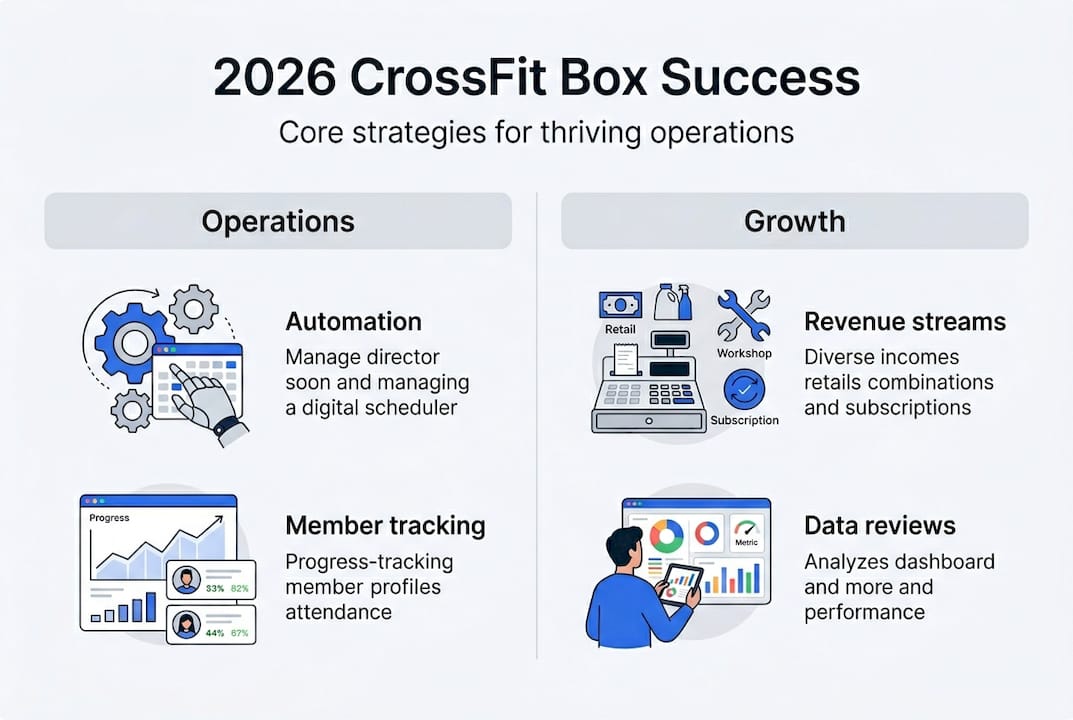
Effective box management starts with robust operational systems that handle daily logistics seamlessly. Class scheduling software maximizes utilization by preventing overbooking while filling available slots efficiently. When members can easily book sessions through mobile apps, satisfaction increases and no-shows decrease.
Automated billing eliminates manual payment processing errors and improves cash flow predictability. Members appreciate the convenience of recurring charges, and owners reclaim hours previously spent chasing late payments. CrossFit gym management software handles these transactions while generating financial reports automatically.
Member tracking systems enable personalized coaching by monitoring individual progress over time. You can identify members who need extra support before they disengage. Structured onboarding programs build skills and retention by introducing movement standards gradually through multiple on-ramp sessions rather than throwing beginners into advanced classes.
Automation extends beyond payments to check-ins, attendance tracking, and re-engagement campaigns. QR code systems speed up entry while collecting valuable data. When members miss classes, automated messages encourage return without requiring staff intervention.
Pro Tip: Implement culture standards enforcement through written codes of conduct and movement protocols that coaches reference consistently. This protects community cohesion as membership grows.
Critical operational elements include:
- Digital waivers and liability forms integrated with member profiles
- Capacity limits per class to maintain coaching quality
- Waitlist management for popular time slots
- Equipment maintenance schedules tracked digitally
- Staff scheduling aligned with peak attendance periods
CrossFit management software solutions consolidate these functions into unified platforms. Choosing systems that communicate reduces duplicate data entry and creates smoother workflows. When scheduling, billing, and member communication operate from one database, you eliminate inconsistencies that frustrate both staff and clients.
Mastering financial metrics and diverse revenue streams
Financial health requires monitoring specific KPIs that reveal operational efficiency and growth potential. Key metrics include ARPM of $195-205 monthly, churn below 5% per month, class utilization above 70%, labor costs under 30%, lifetime value exceeding acquisition cost by 3-5x, and contribution margin above 85%.
Understanding fixed costs like rent and variable costs like coaching wages determines the membership threshold needed to break even. Most boxes require 80-120 active members to cover baseline expenses before generating profit. Tracking these numbers monthly allows quick adjustments when metrics drift.
Revenue diversification stabilizes income and captures different market segments. Successful boxes generate 50-60% from core memberships, 18% from bootcamps, and $5-6k monthly from open gym access, personal training, and drop-ins. This mix protects against seasonal fluctuations and provides options for members at different commitment levels.

Pro Tip: Raising membership prices by $20-30 monthly often retains 90%+ of members while significantly boosting revenue. Test increases with new members first, then grandfather existing clients gradually.
| Revenue stream | Monthly contribution | Member segment served |
|---|---|---|
| Core memberships | $15,000-25,000 | Committed athletes |
| Bootcamp programs | $3,000-5,000 | Beginners and casual fitness seekers |
| Personal training | $2,000-4,000 | Members wanting individualized attention |
| Open gym access | $1,000-2,000 | Experienced lifters and flexible schedules |
| Drop-in fees | $500-1,000 | Travelers and trial members |
Strategic growth through acquisition outperforms building new facilities. Buying existing boxes provides immediate cash flow, established member bases, and proven locations. Construction projects require 12-18 months before generating revenue and carry higher risk.
Eliminating discounts and promotional pricing improves margins dramatically. Boxes offering student rates or family discounts often sacrifice 15-20% of potential revenue. Position your box as premium value rather than competing on price. Adding structured on-ramp programs that charge $150-200 for four sessions creates additional revenue while improving new member retention.
Regular KPI reviews enable data-driven decisions about marketing spend, staffing levels, and operational changes. Use your staff cost calculator to model different coaching scenarios before hiring. Track metrics in dashboards that update automatically from your membership management software rather than manual spreadsheets.
Leveraging technology and software for enhanced management
Management software transforms how boxes handle scheduling, billing, programming, and member engagement. Popular platforms include Wodify, PushPress, ZenPlanner, SugarWOD, Triib, and Fitune, each offering workout programming, leaderboards, automated billing, and mobile apps with varying feature depth and pricing.
All-in-one systems consolidate multiple functions into single platforms, reducing software costs and simplifying staff training. Specialized stacks combine best-in-class tools for specific needs but require integration management. Small boxes with limited budgets benefit from comprehensive single solutions, while larger operations may justify specialized tools for programming separate from billing.
Critical software capabilities include:
- Class booking with capacity limits and waitlists
- Recurring billing with failed payment recovery
- Workout programming libraries and custom WOD creation
- Performance tracking and PR celebrations
- Member mobile apps for engagement
- Automated communication campaigns
- Reporting dashboards for financial and attendance metrics
Pro Tip: Choose software with open APIs if you plan to add specialized tools later. Integration capabilities prevent vendor lock-in and allow gradual system evolution.
| Software | Monthly cost | Best for | Key strength |
|---|---|---|---|
| Wodify | $200-400 | Established boxes | Comprehensive features and reliability |
| PushPress | $150-300 | Growing operations | Marketing automation and lead management |
| ZenPlanner | $150-350 | Multi-location owners | Franchise management tools |
| SugarWOD | $50-100 | Programming focus | Workout library and athlete tracking |
Member apps facilitate daily engagement beyond class attendance. Athletes check upcoming WODs, log results, celebrate achievements, and communicate with coaches through dedicated channels. This constant touchpoint strengthens community bonds and reduces churn by keeping your box top-of-mind.
Automation frees owners from administrative tasks to focus on coaching quality and culture building. When software handles billing, attendance tracking, and routine communications, you reclaim 10-15 hours weekly. This time investment in member relationships generates better retention than any marketing campaign.
CrossFit gym software should integrate seamlessly with group fitness management needs while providing class scheduling that members find intuitive. Test user interfaces with actual members before committing to platforms, as adoption rates depend heavily on ease of use.
Preserving culture and scaling without sacrificing community
Maintaining culture during growth presents the biggest challenge for successful boxes. Poor onboarding increases churn dramatically, as new members who feel lost or intimidated rarely stay beyond three months. Effective on-ramp programs introduce movement standards gradually while fostering connections with coaches and existing members.
Consistent standards protect culture long-term by establishing clear expectations for behavior, effort, and community participation. Written codes of conduct that coaches enforce uniformly prevent erosion as membership grows. When everyone understands and follows the same protocols, new members integrate smoothly without disrupting established dynamics.
Scaling risks include:
- Weakening culture through inconsistent coaching standards
- Rising rent and inflation pressures on margins
- Over-reliance on large group classes that lack profitability
- Insufficient business education for owner-operators
- Losing personal connections as membership exceeds 150-200 active members
The big-group model fails profitability analysis despite appearing efficient. Classes with 20-30 athletes generate lower revenue per square foot than semi-private sessions with 6-10 participants. Coaching quality suffers in large groups, leading to higher injury rates and member dissatisfaction. Semi-private training commands premium pricing while delivering better results and stronger relationships.
Pro Tip: Track culture indicators monthly through member surveys asking about community connection, coaching quality, and facility cleanliness. Declining scores predict churn 60-90 days before members cancel.
Strategic scaling approaches:
- Establish maximum membership capacity based on class schedule and facility size
- Create waitlists when approaching capacity rather than overcrowding classes
- Open second locations before degrading experience at the original box
- Hire coaches who embody cultural values, not just movement competency
- Document standard operating procedures for consistency across growth
Franchise models provide brand recognition and some operational support, but self-reliant owners who invest in business education often achieve better financial outcomes. Understanding marketing, finance, and operations deeply allows adaptive responses to local market conditions that corporate playbooks cannot address.
Owners should proactively monitor member satisfaction through regular feedback collection and quick response to concerns. Small issues left unaddressed compound into culture problems that drive away your best members. Financial health tracking ensures you catch margin erosion before it threatens viability.
Fitness studio management software supports cultural consistency by standardizing communications and tracking member engagement patterns. Functional fitness gym software tailored to CrossFit needs helps maintain quality standards even as operations grow more complex.
Explore Finegym solutions for CrossFit box management
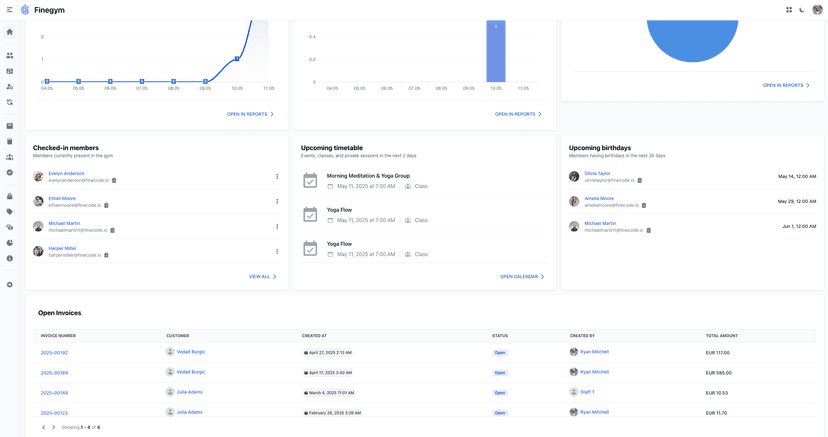
Implementing the strategies outlined requires robust software that handles complexity while remaining intuitive for daily use. Finegym provides all-in-one gym software tailored specifically for CrossFit boxes, integrating scheduling, automated billing, and comprehensive membership management into unified platforms.
Our solutions automate operational tasks that consume owner time, freeing you to focus on coaching excellence and culture building. Specialized CrossFit features enhance member tracking and community engagement through mobile apps and performance monitoring tools. Flexible packages scale from single boxes to multi-location operations seeking sustainable growth.
Explore our complete gym management software to see how integrated systems streamline daily operations. Visit our CrossFit gym management software page for specialized features designed around CrossFit workflows. Learn how our membership management features reduce churn and increase lifetime value through better member experiences.
Frequently asked questions
What does CrossFit box management include?
Box management encompasses operational systems for scheduling, billing, and member tracking, plus cultural standards enforcement and structured onboarding programs. It requires balancing coaching quality with business operations, financial planning, and technology implementation to create sustainable growth.
What financial metrics matter most for box owners?
Track average revenue per member, monthly churn rate, class utilization percentage, labor cost ratio, and contribution margin above 85%. Monitor lifetime value compared to acquisition cost, aiming for ratios of 3-5x to ensure marketing spend generates positive returns.
How does software improve box operations?
Management platforms automate billing, scheduling, and member communications while reducing administrative time by 10-15 hours weekly. Software enables performance tracking, mobile engagement, and data-driven decisions about staffing and marketing that improve retention and profitability.
Why is culture preservation critical during scaling?
Culture attracts and retains your best members who pay premium prices and refer friends. Inconsistent standards during growth create confusion and weaken community bonds, leading to higher churn. Maintaining clear expectations and coaching quality protects the competitive advantage that differentiates your box.
Should boxes focus on large group classes or semi-private training?
Semi-private training with 6-10 participants generates higher revenue per square foot while delivering better coaching quality and member results. Large group classes sacrifice profitability and increase injury risk despite appearing efficient. Premium pricing for smaller cohorts improves both margins and member satisfaction.