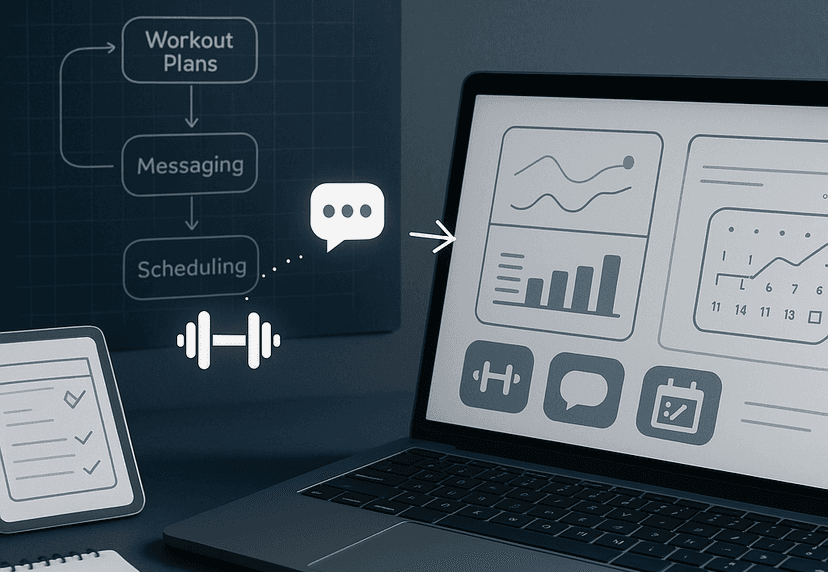

Quick heads up: We're diving into building an online fitness coaching business here. Finegym can handle a lot of the heavy lifting - from managing clients and booking virtual sessions to selling packages and keeping everyone connected through a mobile app. Want the latest details on how Finegym might fit your coaching setup? Check out our pricing, drop us a line at contact@finegym.io, or get started for free to see it in action.
Let's Talk About Online Coaching
Look, the fitness world isn't what it used to be. Online coaching has completely changed the game for trainers and coaches - and honestly, it's about time. Between tech getting better, people wanting more convenience, and well... recent world events that made us all rethink how we do business.
Here's the thing: being good at fitness doesn't automatically make you good at running an online business. There's so much more to it. (For a deeper dive into online personal training specifically, check out our comprehensive guide.) You need to think strategically about everything - your business plan, which tech you'll use, how you'll market yourself, and how you'll keep clients happy. That's exactly what we're covering in this guide.
What Kind of Online Coach Do You Want to Be?
First Things First: Pick Your Style
Before you get caught up in all the shiny tech options, you've got to nail down your business model. What works for you? Here's what most successful coaches are doing:
- One-on-One Coaching: You're working closely with individual clients - custom programs, regular check-ins, the whole nine yards
- Group Coaching: Same goals, shared journey. You're guiding multiple people through similar programs with that community vibe
- Membership Model: Think Netflix for fitness. Clients pay monthly for access to your programs and some coaching support
- Mix It Up: Some online work, some in-person sessions when possible
- Set-and-Forget Products: Self-guided programs where clients do most of the work themselves
Whatever you choose will determine what tech you need, how much you charge, and how you'll actually run things day-to-day.
Why Online Coaching Rocks
- Work from anywhere: Your clients could be in Tokyo while you're sipping coffee in your pajamas
- Scale like crazy: Way more potential than being stuck in a gym all day
- Let tech do the boring stuff: Automate scheduling, payments, and admin tasks
- Multiple income streams: Not just trading time for money anymore
- Data that actually matters: Track progress better than you ever could with a clipboard
What You Need to Figure Out Before Jumping In
- Who's your perfect client? Get specific about demographics and what you specialize in
- How will you package your services? Program length, what's included, how it's delivered
- What should you charge? Do your homework on rates, but don't sell yourself short
- What tech do you actually need? Match your tools to your business model
- Legal stuff: Insurance, contracts, terms of service - boring but necessary
The Tech You Actually Need
Okay, let's talk about the backbone of your business - your tech stack. Don't worry, it's not as complicated as it sounds. Here's what matters:
All-in-One Coaching Platforms
These are the platforms that try to do everything for your coaching business. Some do it better than others.
Here's What's Out There:
-
Finegym: This one's built for gym management but works great for online coaches too. Honestly, it covers most of what you'll need:
- Client Management: Keep detailed profiles, track conversations with notes and tags, handle documents (contracts, waivers, program guides) with e-signatures, and keep everything organized in one place.
- Package Creation & Sales: Set up different coaching packages - monthly subscriptions, fixed programs, session bundles. Payment processing through Stripe, discount codes, invoicing - it's all there.
- Virtual Session Scheduling: Calendar that actually works for booking 1:1 sessions and group calls. Clients can book their own spots based on your availability.
- Mobile App for Clients: Your clients get their own app (iOS and Android) to see schedules, book sessions, manage their packages, make payments, and access any documents you share.
- Program Delivery: You can attach detailed program documents to packages or share them through the document system. The text editor lets you add notes and instructions right in the plan descriptions.
- Business Insights: Reports on revenue and client engagement, customizable email templates, and all the business management tools you need.
The truth is, Finegym works really well as your business backbone. If you need super-specific workout builders with huge exercise video libraries and detailed logging, you might pair it with a specialized workout tool. But for most coaches? It'll handle everything. Check out features and pricing or get started for free to see if it fits your style.
-
TrueCoach: Really focused on workout delivery and tracking progress. Good communication tools.
-
Trainerize: Tries to do everything - workouts, nutrition, payments. Pretty solid option.
-
My PT Hub: Another all-in-one that covers client management, workout programming, and scheduling.
What to Look For:
- How easy is it for you AND your clients to use?
- Does the mobile app actually work well?
- Can you customize the exercise library?
- How good are the communication features?
- Does progress tracking make sense?
- Will it play nice with other tools you're using?
- What happens to pricing when you grow?
Staying Connected with Clients
You've got to talk to your clients regularly. It's what keeps them around.
Your Options:
- Email Marketing: MailChimp, ConvertKit, ActiveCampaign
- Quick Messages: WhatsApp Business, Telegram
- Video Calls: Zoom, Google Meet, Microsoft Teams
- Building Community: Facebook Groups, Circle, Mighty Networks
Handling Money and Business Stuff
You need reliable systems for getting paid and managing your business:
What's Available:
- Getting Paid: Stripe, PayPal, Square. Just so you know - platforms like Finegym already have Stripe built in, so you might not need separate payment tools.
- Booking Sessions: Calendly, Acuity, ScheduleOnce (though again, Finegym handles scheduling too). Want more options? Check out our scheduling app comparison.
- Customer Management: HubSpot, Pipedrive
- Bookkeeping: QuickBooks, Xero, Wave
Creating Content That Actually Matters
Good content brings in new clients and keeps current ones engaged:
Tools Worth Using:
- Making Videos: Canva, InVideo, iMovie
- Design Work: Canva, Adobe Creative Suite
- Storing Content: YouTube, Vimeo, Google Drive
- Posting on Schedule: Later, Buffer, Hootsuite
Creating Your Coaching Programs
What Makes a Great Program?
Look, not all coaching programs are created equal. The good ones have these things in common:
- Structure that makes sense: Clear phases with specific goals (not just random workouts)
- Built to scale: Core framework you can tweak for different people
- Gets progressively harder: You're pushing people forward, not keeping them comfortable
- Tracks real results: Numbers and metrics that actually mean something
- Keeps people accountable: Regular check-ins and progress reviews
How Much Should You Charge?
Pricing is tricky, but here are some approaches that work:
- Value-based pricing: What's the transformation worth to your client? Price accordingly
- Tiered options: Different levels of service at different price points
- Package deals: Longer commitments = better rates
- Mix and match: Monthly subscriptions plus one-time add-ons
The range is huge - anywhere from $97 to $500+ per month, depending on your specialization, experience, and who you're targeting. Don't just pick the cheapest option thinking you'll get more clients.
Getting New Clients Started Right
First impressions matter. A lot. Here's how to nail your onboarding:
- Deep dive assessment: Don't just ask their goals - understand their history, limitations, what's worked before
- Welcome package: Set expectations about how you work, what they can expect, and how to reach you
- Tech walkthrough: Actually show them how to use your platforms (don't just send a PDF)
- Baseline measurements: Get starting numbers so you can prove progress later
- Goal-setting session: Work together to set realistic short and long-term targets
Getting Your Name Out There
Building a Brand That Actually Matters
The fitness space online is crowded. Really crowded. You need something that makes you different:
- Visual identity: Consistent colors, fonts, messaging - the whole package
- What makes you special: Why should someone choose you over the hundreds of other coaches?
- Your approach: How do you actually help people succeed? What's your method?
- Your story: Why are you doing this? People connect with stories, not just credentials
- The experience: What's it like working with you? Set those expectations
Where to Market Yourself
Here's the deal - you can't just pick one channel and hope for the best. Successful coaches are everywhere:
- Content that teaches: Blog posts, videos, podcasts that actually help people (not just sales pitches)
- Social media done right: Be where your ideal clients hang out, and actually engage with them
- Email that doesn't suck: Regular valuable content mixed with offers that make sense
- Team up with others: Work with complementary businesses and influencers who share your audience
- Paid ads: Facebook, Instagram, Google - but only if you know what you're doing
Content That Actually Brings in Clients
Content marketing works really well for fitness pros, but you've got to do it right:
- Teach something useful: Share knowledge about your specialty (not just "eat less, move more")
- Show real transformations: Client stories and results (with permission, obviously)
- Pull back the curtain: Show how you work and what makes your approach different
- Solve actual problems: Address the real challenges your ideal clients are facing
- Prove you know your stuff: Share your expertise without being preachy about it
Keeping Clients Happy (And Growing Your Business)
Making the Experience Worth It
Want clients to stick around? It's all about results and how they feel working with you:
- Make it personal: Don't give everyone the same cookie-cutter program
- Stay in touch: Regular check-ins and updates (don't just disappear between sessions)
- Celebrate wins: Highlight their progress and achievements - big and small
- Build community: Help clients connect with each other when possible
- Keep getting better: Ask for feedback and actually use it to improve
Growing Beyond Just You
Once you're busy (good problem to have), here's how to scale without losing your mind. (Check out our business software guide for more details on tools.)
- Hire help: Other coaches or admin support - you don't have to do everything yourself
- Expand your offerings: New programs or specialties to serve more people
- Automate the boring stuff: Systems and processes that run without you
- Create passive income: Products and programs that don't need your constant attention
- Partner up: Work with businesses that complement what you do
The Legal Stuff (Boring But Important)
Cover Your Bases
Don't skip this part - seriously:
- Get certified: Keep your credentials current and relevant
- Get insured: Professional liability coverage isn't optional
- Register your business: Follow your local requirements
- Have clear contracts: Client agreements that spell everything out
- Protect privacy: Solid protocols for handling client information
Do the Right Thing
Keep your standards high - it's good for business and good for your conscience:
- Stay in your lane: Work within your qualifications and refer out when you should
- Be realistic: Don't promise impossible results or make crazy guarantees
- Use real science: Base your methods on actual evidence, not the latest fad
- Be transparent: Clear communication about pricing, cancellations, everything
- Keep secrets: Client information stays private - always
Real Examples: What Actually Works
Example 1: The Specialist
The Coach: Former competitive athlete who focuses on strength and nutrition for performance
How They Do It: High-end 1:1 coaching with 3-month minimums
Why It Works:
- Super targeted audience (competitive athletes who can afford premium pricing)
- Thorough assessment process that actually means something
- Programs based on data, adjusted regularly
- Weekly video form checks (athletes love this stuff)
- Referral system that rewards clients for sending friends
Example 2: The Community Builder
The Coach: Weight loss specialist who's all about sustainable changes (not crash diets)
How They Do It: 8-week group programs with limited spots available
Why It Works:
- Amazing before/after content that sells itself
- Real community feel - clients support each other
- Each week has a clear focus (not just "lose weight")
- Mix of group support and individual accountability
- Follow-up programs for people who want to continue
Wrapping This Up
Building a successful online coaching business isn't just about knowing fitness. You need the right mix of expertise, business sense, and tech savvy. Pick the right platforms, create programs that actually work, market yourself effectively, and focus on giving clients an experience they'll love.
The online fitness world keeps changing, and honestly? That's exciting. The coaches who adapt and innovate while still delivering real results are going to do really well. Whether you're moving online from in-person training or starting completely fresh, there's never been a better time to build something meaningful and profitable.
Finegym can handle most of the heavy lifting for your online coaching business. From getting clients set up and managing packages with secure payments, to booking virtual sessions and keeping everyone connected through a mobile app, it's got the tools you need to build and grow.
Ready to get serious about your online coaching?
- Get Started for Free to see how Finegym fits your needs.
- Check out our Features and Pricing.
- Or just Sign Up and start building today!