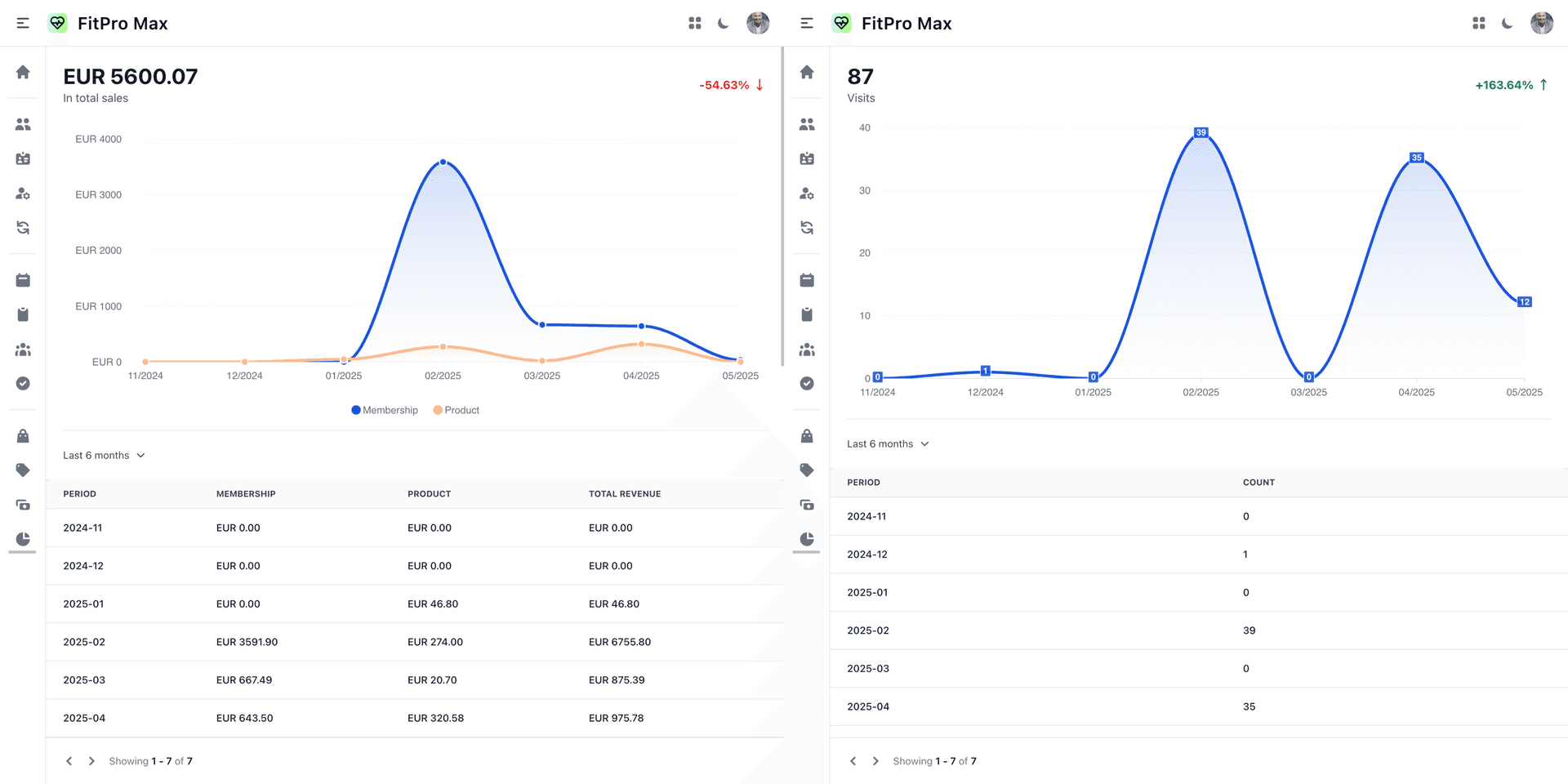
Important Note: This article discusses analytics and reporting as general concepts in the fitness industry and describes various types of reporting capabilities. Finegym currently offers essential reporting features including revenue reports, membership statistics, attendance analytics, and referral analysis with date filtering capabilities. These features are designed to provide fitness businesses with the key insights needed to make informed decisions.
Introduction
In today's competitive fitness industry, gut feelings and intuition are no longer enough to drive business success. Data-driven decision making has become essential, with fitness businesses increasingly turning to reporting and analytics tools to gain insights into their operations, members, and finances.
The fitness industry generates massive amounts of data daily. Every member check-in, class booking, payment transaction, and equipment usage creates valuable data points. According to industry research, gyms that actively use data analytics see an average of 15-20% improvement in member retention and 25% increase in operational efficiency compared to those relying solely on traditional management approaches.
Running a successful fitness business goes beyond providing quality workouts and great customer service. To truly thrive, you need a deep understanding of your business performance. This is where reporting and analytics come into play. Gone are the days of manually crunching numbers or making guesses about what's working and what isn't.
Modern fitness businesses face unique challenges:
- Member retention rates averaging only 70-75% annually across the industry
- Peak hour congestion leading to member dissatisfaction
- Revenue predictability issues with seasonal fluctuations
- Staff optimization challenges during varying demand periods
- Marketing ROI uncertainty without proper tracking mechanisms
With gym management software like Finegym, fitness studios, gyms, and health clubs can access comprehensive insights through integrated member management, scheduling systems, QR check-in technology, and Stripe payment processing. For detailed implementation guidance, review our complete guide to gym management software. These platforms provide real-time analytics that help business owners make data-driven decisions that propel their business forward.
This blog will explore how reporting & analytics can benefit your fitness business. We'll also show you how to utilize these tools effectively for customer retention, streamlined operations, and business growth.
Why Fitness Businesses Need Reporting & Analytics
Before we jump into the details, it's important to understand why analytics are essential for the modern fitness professional. The fitness industry has evolved significantly, and successful businesses now operate more like data-driven enterprises than traditional service providers.
The Cost of Poor Data Management
Consider these industry statistics that highlight the importance of proper analytics:
- $500-1,500 average cost to acquire a new gym member
- 67% of fitness businesses that close cite poor financial management as a primary factor
- 40% reduction in operational efficiency when staff schedules aren't optimized
- 30% of gym revenue lost due to failed payment processing and billing issues
Core Benefits of Analytics Implementation
-
Efficiency in Decision-Making: Avoid guesswork with data that helps you allocate time and resources effectively. Instead of wondering whether to add more evening classes, you can see exactly when demand peaks and make informed scheduling decisions.
-
Track Key Metrics with Ease: From membership growth to class attendance, get an overview of your business's health at a glance. Modern gym management platforms provide real-time dashboards that display critical KPIs instantly.
-
Improve Retention: Understand member behavior and adapt services to keep your community engaged. Analytics can identify at-risk members before they cancel, allowing for proactive intervention strategies.
-
Boost Revenue Opportunities: Identify new ways to upsell services, increase signups, and reduce operational bottlenecks. Data reveals which members are most likely to purchase personal training or upgrade memberships.
-
Predictive Planning: Use historical data to forecast seasonal trends, plan marketing campaigns, and prepare for busy periods. This proactive approach prevents understaffing during peak times and overinvestment during slow seasons.
Integration with Modern Technology
Today's gym management systems integrate seamlessly with various technologies to provide comprehensive analytics:
- Mobile apps that track member engagement and app usage patterns
- QR check-in systems that provide precise attendance data and facility usage metrics
- Integrated payment processing through platforms like Stripe that streamline financial reporting
- Staff management tools that optimize scheduling and track performance metrics
- Document management systems that help maintain compliance and track member agreements
Now, let's take a deep-dive into how different fitness business functions can benefit from analytics tools.
Useful Applications of Reporting in Fitness Businesses
1. Customer Behavior Analytics
Keeping members engaged is a top priority for any fitness business. But do you know how your customers are interacting with your services? Effective reports track metrics such as attendance patterns, class popularity, and cancellation rates.
Advanced Member Engagement Metrics:
- Visit frequency patterns - Track how often individual members use your facility
- Class booking behavior - Identify which members consistently book classes vs. those who prefer open gym time
- Peak usage times - Understand when your facility experiences highest demand
- Cancellation patterns - Spot trends in last-minute cancellations or no-shows
- Member journey mapping - Follow new member behavior from signup through their first 90 days
Real-World Example: A mid-sized fitness studio noticed through their analytics that 65% of their evening yoga class attendees also participated in strength training sessions. This insight led them to create a "Yoga + Strength" package that increased average member spending by $45 monthly while improving retention rates by 18%.
- Example Insight: See that attendance in your evening yoga classes has increased? Add more slots to your schedule or launch complementary services like personal yoga coaching.
- Outcome: This data helps ensure member satisfaction while helping you avoid underused resources.
Key Performance Indicators to Track:
- Member lifetime value (MLV) - Average revenue per member over their entire membership duration
- Class utilization rates - Percentage of available spots filled across different class types
- Member satisfaction scores - Derived from attendance consistency and engagement levels
2. Human Resource Management
Managing trainers and instructors can be a logistical challenge, but a gym management system with good reporting can simplify staffing decisions.
- Use reports to monitor trainer activity, such as coaching hours and class feedback.
- Optimize staff schedules to avoid overlapping or understaffing during peak hours.
Key Benefit: Retain top-performing instructors by aligning their schedules with high-value time slots and recognizing their efforts based on performance data.
3. Membership Growth Tracking
Every business needs to grow, and for fitness businesses, that means increasing memberships. Analytics tools make it easier to track member sign-up trends and plan marketing efforts accordingly.
- Example Data Point: Your reports might show that most membership sign-ups happen after free trial promotions.
- Recommended Action: Run targeted campaigns offering free trials during low-enrollment months to boost signups.
4. Financial Performance Overview
Staying profitable means having a firm grasp of your incoming revenue and outgoing costs. Good reporting tools streamline this process by tracking memberships, class revenues, and overdue payments.
Comprehensive Financial Tracking:
- Revenue stream analysis - Break down income by membership types, personal training, retail, and additional services
- Payment processing insights - Monitor successful transactions, failed payments, and churn rates through integrated Stripe analytics
- Seasonal revenue patterns - Identify quarterly trends to better manage cash flow and plan promotions
- Member payment behavior - Track on-time payments, late fees collected, and payment method preferences
- Profitability by service - Calculate which offerings generate the highest margins
Industry Benchmarks for Financial Health:
-
Monthly recurring revenue (MRR) growth should target 5-10% month-over-month for healthy gyms
-
Payment failure rates should remain below 8% for optimal cash flow
-
Average revenue per member typically ranges from $35-85 depending on facility type and location
-
Generate detailed revenue reports to better understand your profitability patterns.
-
Identify overdue payments and send reminders to members.
Key Takeaway: By effectively tracking invoices and payments, gym owners can save time and reduce late payments, leading to improved cash flow. Integration with modern payment systems enables automatic retry logic for failed payments and streamlined dunning management.
5. Optimize Class & Equipment Utilization
Are your classes packed while some trainers remain under-utilized? With fitness business analytics, you can identify usage patterns and make informed scheduling decisions.
- How It Helps: Identify which classes are consistently waitlisted and consider adding new sessions. Meanwhile, you can evaluate equipment usage to make better purchasing decisions.
- Impact: Better scheduling and resource planning delivers more value to your members while reducing operational inefficiencies.
6. Marketing & Member Engagement Insights
How do you know if your marketing efforts are actually working? Good reporting makes analyzing performance simpler.
- Track referral sources to find out whether customers join through social media, email campaigns, or word-of-mouth referrals.
- Understand which messaging resonates best with your target audience.
For example, if referral campaigns bring more success than digital ads, such data ensures you focus on referral programs to maximize ROI.
How to Make the Most of Reporting & Analytics Tools
Now that you're aware of the diverse ways analytics can support your fitness business, here's how to start leveraging them effectively.
Identify Key Metrics to Monitor
Each fitness business is unique, so it's crucial to focus on what matters most to you. Some common key performance indicators (KPIs) include:
- Occupancy Rates: How full are your classes on average?
- Retention Rates: How many members stay subscribed month over month?
- Revenue Per Member: How much income does each member bring in?
Set Clear Goals
Use your analytics to track progress toward well-defined business goals. Examples include increasing member retention by 10% in Q1 or reducing class no-shows by 20%.
Act on Insights
Data doesn't mean anything if you don't act on it. For example, if yearly reports show a spike in cancellations during summer, consider offering seasonal discounts or specific programs to counteract the trend.
Regularly Review & Refine Tactics
Analytics isn't a one-and-done process. Review your reports regularly to adapt your strategy. A good system allows you to download reports for quarterly meetings, providing a clear snapshot of your business's performance.
How Finegym Supports Analytics in Fitness Businesses
Finegym includes essential reporting features that help fitness businesses understand their performance. Here's how Finegym's reporting capabilities can drive your business success:
Revenue Reports
Finegym provides detailed revenue reporting that helps you track your financial performance:
- Track revenue over customizable date ranges
- View total revenue, broken down by source
- Identify revenue trends to inform business planning
- Filter data to focus on specific periods or revenue types
Membership Statistics
Gain insights into your membership base with dedicated membership reports:
- Monitor membership growth trends
- Track new sign-ups over time
- Analyze membership plan popularity
- Identify membership churn patterns
Attendance Analytics
Understand how members are using your facility with attendance reporting:
- Track check-ins by date and time
- View class attendance patterns
- Identify peak usage times
- Monitor member engagement through attendance frequency
Referral Analysis
Learn how members are finding your business with referral source tracking:
- See which referral sources bring in the most members
- Track referral effectiveness over time
- Allocate marketing resources more effectively based on data
User-Friendly Interface
Finegym's reporting tools are designed with fitness business owners in mind:
- Easy-to-use date filtering for all reports
- Simple, clean visual presentation of data
- Export capabilities for sharing and further analysis
- Accessible on both desktop and mobile devices
These reporting features are integrated directly into Finegym's comprehensive management platform, giving you a single solution for both operations and analytics.
Advanced Analytics Strategies for Fitness Success
Creating Custom Dashboards
The most successful fitness businesses create customized dashboards that align with their specific goals and operational needs. Consider these dashboard configurations:
Executive Dashboard for Owners:
- Monthly recurring revenue trends
- Member acquisition costs vs. lifetime value
- Overall facility utilization rates
- Staff performance metrics
- Key financial ratios and profitability indicators
Operational Dashboard for Managers:
- Daily attendance patterns
- Class booking and cancellation rates
- Equipment maintenance schedules
- Staff scheduling optimization
- Member feedback and satisfaction scores
Marketing Dashboard for Growth Teams:
- Lead conversion rates from different channels
- Member referral program performance
- Campaign ROI across digital and traditional marketing
- Seasonal membership trends
- Geographic member distribution patterns
Implementing Data-Driven Member Retention Strategies
Analytics enables proactive member retention through predictive insights:
Early Warning Systems:
- Identify members with declining visit frequency (potential churn risk)
- Monitor payment delays or billing issues
- Track engagement drops after initial 30-60-90 day periods
- Flag members who stop booking classes but maintain memberships
Targeted Intervention Programs:
- Automated outreach for at-risk members
- Personalized workout recommendations based on usage patterns
- Special offers for members showing decreased engagement
- Success story sharing to re-motivate struggling members
Leveraging Mobile App Analytics
Modern gym management platforms with mobile apps provide rich behavioral data:
- App engagement metrics - Session duration, feature usage, and navigation patterns
- Workout logging patterns - Which members track their progress and how often
- Communication preferences - Response rates to push notifications and in-app messages
- Social features usage - Member interaction with community features and challenges
Drive Success with Data
Fitness professionals know that passion and hard work are essential, but data bridges the gap between a good business and a great one. By implementing analytics tools in your gym or studio, you're not just tracking metrics—you're unlocking your business's full potential.
The fitness industry continues to evolve rapidly, with successful businesses distinguishing themselves through intelligent use of technology and data. Understanding emerging fitness technology trends can help position your business for future success. Modern gym management systems like Finegym integrate seamlessly with existing workflows while providing powerful analytics capabilities that drive real business results.
Measurable Impact of Analytics Implementation:
- 23% average increase in member retention rates within the first year
- 31% improvement in operational efficiency through optimized scheduling
- 18% boost in average revenue per member through data-driven upselling
- 42% reduction in administrative time spent on manual reporting tasks
Finegym's reporting capabilities give you the insights needed to make informed decisions without overwhelming you with unnecessary complexity. For insights on maximizing your software investment, explore our detailed ROI analysis for gym management software. Our focused approach to reporting delivers the metrics that matter most to fitness businesses, helping you improve member retention, optimize resource allocation, and drive revenue growth through integrated member management, QR check-in systems, mobile app analytics, and comprehensive staff management tools.
Ready to Transform Your Fitness Business?
If you're ready to simplify your gym management and make data-driven decisions, get started for free today. Experience how our comprehensive reporting tools, combined with seamless member management, scheduling, payment processing, and analytics capabilities, can help your business achieve new levels of success.