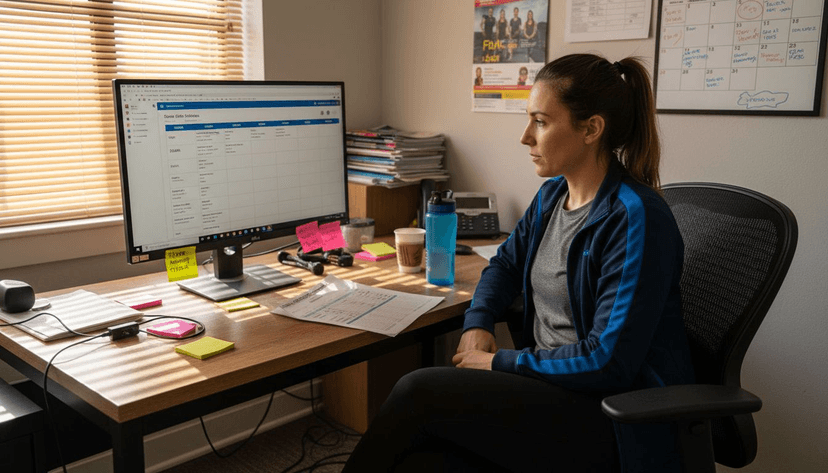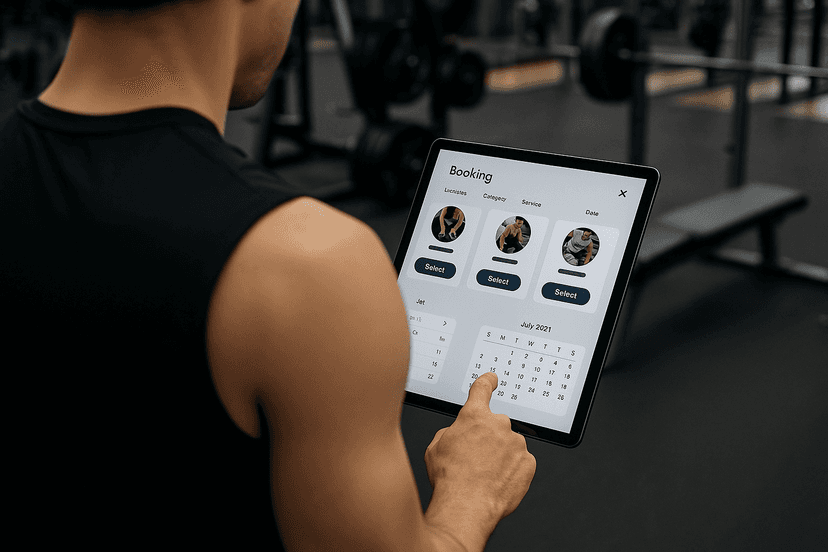

Trying to juggle member preferences, instructor skills, and facility resources often feels like a puzzle for many American fitness studio owners. Class scheduling impacts not only member retention but also daily operations and team morale. This guide offers practical strategies for building schedules with tools like FineGym and proven assessment methods, helping you deliver engaging sessions that truly fit your community’s needs and maximize your space.
Table of Contents
- Step 1: Assess Member Needs And Facility Resources
- Step 2: Configure FineGym For Class Scheduling
- Step 3: Design Optimal Class Time Slots And Formats
- Step 4: Assign Qualified Trainers To Sessions
- Step 5: Verify Schedule Accuracy And Member Access
Quick Summary
| Key Insight | Explanation |
|---|---|
| 1. Conduct Member Surveys | Collect insights on class preferences to tailor offerings effectively. |
| 2. Use FineGym Software | Implement a scheduling system to streamline class management and bookings. |
| 3. Optimize Class Formats | Analyze attendance data to create engaging class schedules that cater to various fitness levels. |
| 4. Match Instructors Wisely | Assign trainers based on their expertise to ensure high-quality class experiences. |
| 5. Verify Schedule Accuracy | Regularly check schedule details to maintain reliability and enhance member trust. |
Step 1: Assess Member Needs and Facility Resources
Building an effective fitness class schedule starts with understanding your gym's unique ecosystem - the intersection of member preferences and facility capabilities. Conducting a comprehensive needs assessment helps you create targeted programming that truly serves your community.
To evaluate your gym's potential, you'll want to gather insights through multiple channels. Start by collecting data through:
- Member surveys asking about preferred class times, fitness goals, and interests
- Attendance tracking for existing classes to identify popular time slots
- Equipment inventory to determine potential class formats
- Staff skill assessments to understand available instructor expertise
Your goal is to identify gaps between what members want and what your facility currently offers. This might mean analyzing demographic data like age ranges, fitness levels, and work schedules to design classes that genuinely appeal to your specific population. ACSM's facility guidelines recommend a systematic approach that considers equipment, space, staffing, and safety when planning.
Strategic class scheduling isn't about offering everything - it's about offering the right things for your specific community.
Analyzing these factors helps you create a targeted, efficient class schedule that maximizes member engagement and facility utilization. By understanding both member needs and your resource capabilities, you'll design programming that feels personalized and professional.
Pro tip: Consider running a pilot program for new class types, gathering immediate feedback to validate your assessment before full implementation.
Step 2: Configure FineGym for Class Scheduling
Once you've assessed your gym's needs, it's time to transform those insights into a functional class schedule using FineGym's powerful cloud-based scheduling platform. The system allows you to quickly translate your member and facility research into a comprehensive class management strategy.
To get started, you'll want to configure several key elements within the platform:
- Create class templates with specific details like duration, intensity level, and required equipment
- Define instructor profiles matching staff skills to appropriate class types
- Set capacity limits based on your facility's physical space and equipment
- Configure booking and waiting list parameters
- Establish recurring schedule options for consistent class offerings
FineGym's integrated system makes it simple to manage fitness facility operations by allowing administrators to assign trainers, define precise time slots, and track member bookings across mobile and desktop interfaces. This centralized approach ensures smooth scheduling and maximizes your facility's potential.
Effective class configuration isn't just about filling time slots - it's about creating meaningful fitness experiences for your members.
Carefully mapping out these configurations will help you design a dynamic, responsive class schedule that meets your community's fitness goals while optimizing your gym's resources and instructor talent.
Here's a comparison of class scheduling software features and their advantages:
| Feature | Scheduling Software (e.g., FineGym) | Traditional Manual Scheduling |
|---|---|---|
| Automation | Allows instant updates | Requires manual changes |
| Booking Access | Online/mobile registration | In-person or phone only |
| Data Analytics | Tracks attendance trends | Limited reporting ability |
| Conflict Detection | Prevents double-booking | Risk of scheduling errors |
Pro tip: Test your initial schedule configuration with a small group of members to gather feedback and make refinements before full implementation.
Step 3: Design Optimal Class Time Slots and Formats
Creating a strategic class schedule requires more than randomly assigning time slots - it demands a scientific approach to maximizing member engagement and facility utilization. Optimization algorithms can help design effective scheduling by balancing multiple complex constraints like trainer availability, member preferences, and physical space limitations.
To develop your optimal class schedule, consider these key strategic elements:
- Analyze peak member attendance times through historical data and survey insights
- Map instructor availability against most popular workout times
- Create diverse class format combinations to appeal to different fitness levels
- Balance high-intensity and low-impact class offerings
- Distribute class types across different time blocks
The goal is to create a schedule that feels personalized and responsive to your specific community's needs. Constraint-based scheduling techniques can help you systematically approach time slot design, ensuring you minimize scheduling conflicts while maximizing resource efficiency.
Effective class scheduling is an art and a science - it's about creating opportunities for fitness transformation, not just filling time slots.
By thoughtfully mapping your class formats and time slots, you'll create a dynamic schedule that keeps members engaged, instructors utilized, and your facility running at peak performance.

Pro tip: Use data analytics to continuously refine your class schedule, tracking metrics like attendance rates and member feedback to make ongoing improvements.
Step 4: Assign Qualified Trainers to Sessions
Designing an exceptional fitness class experience starts with matching the right instructors to the right classes. Fitness trainer qualifications are critical for ensuring member safety, engagement, and overall class quality.
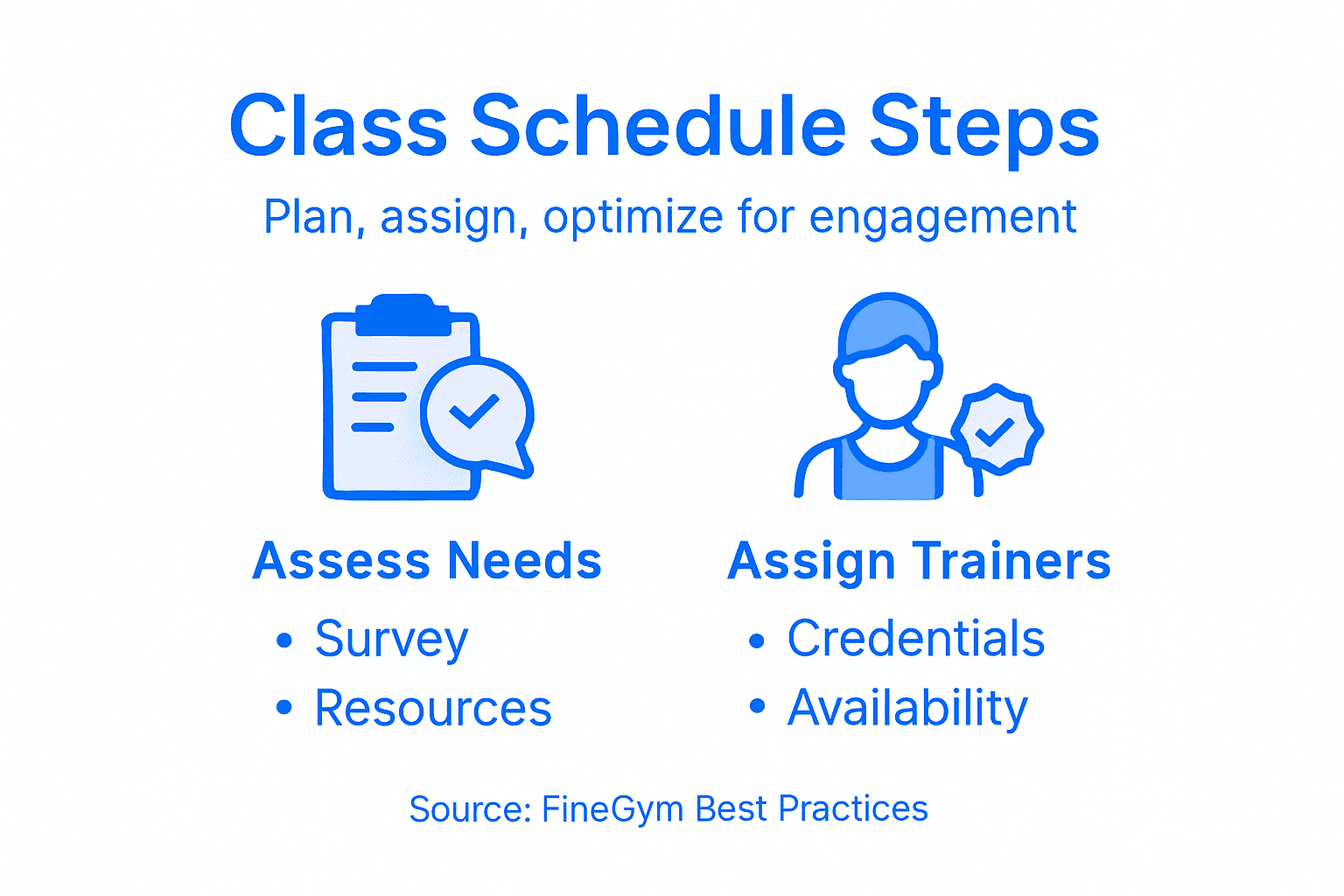
To strategically assign trainers, focus on these key selection criteria:
- Review individual instructor certifications and specialized training
- Match instructor expertise with specific class formats
- Assess instructor communication and motivational skills
- Evaluate trainer's experience with different fitness levels
- Consider instructor's teaching style and member feedback
The Training of Trainers model provides an excellent framework for developing consistent, high-quality instruction across your fitness program. This approach ensures that each trainer can effectively lead, motivate, and guide members through their fitness journey.
Great trainers don't just demonstrate exercises - they inspire transformation and create meaningful fitness experiences.
By carefully selecting and strategically assigning instructors, you'll create a dynamic, professional training environment that keeps members engaged and coming back for more.
Pro tip: Implement a quarterly instructor review process to continuously evaluate and improve trainer performance and member satisfaction.
Step 5: Verify Schedule Accuracy and Member Access
The final step in creating an exceptional fitness class schedule involves ensuring every detail is precise and accessible to your members. Gym management systems provide critical verification tools that help you confirm schedule reliability and member access permissions.
To guarantee schedule accuracy and smooth member experience, implement these verification strategies:
- Cross-check instructor availability against current schedule
- Test member login credentials for class registration
- Verify time slot and room assignments
- Confirm equipment availability for each class
- Review recent member access logs
Member-checking approaches offer an additional layer of validation by directly soliciting feedback from your fitness community. This interactive verification process helps catch potential scheduling conflicts or accessibility issues before they impact member experience.
Accuracy is not just about numbers - it's about creating a seamless, trustworthy fitness environment for your members.
Systematic verification transforms your class schedule from a simple timetable into a reliable, member-focused resource that supports your gym's commitment to exceptional service.
Here's a summary of the major steps involved in building an effective gym class schedule:
| Step | Primary Action | Key Outcome | Example Impact |
|---|---|---|---|
| Assess Needs | Gather member and facility data | Identify scheduling gaps | Increase member satisfaction |
| Configure Software | Set up FineGym platform | Streamline management | Reduce admin workload |
| Design Schedule | Optimize time slots and formats | Maximize attendance | Improve facility utilization |
| Assign Trainers | Match qualifications to classes | Enhance instruction quality | Boost member retention |
| Verify Accuracy | Test schedule and access | Ensure reliability | Prevent registration issues |
Pro tip: Implement an automated monthly audit process that randomly checks 10-15% of class schedule entries to catch potential errors before they become problematic.
Streamline Your Gym's Class Scheduling with FineGym
Creating a fitness class schedule that truly meets member needs and maximizes facility resources can be challenging. From assessing member preferences and configuring schedules to assigning qualified trainers and verifying availability, each step demands precision and strategy to keep your gym running smoothly and your members engaged. FineGym.io understands these challenges. Our comprehensive SaaS platform offers an all-in-one solution that simplifies every aspect of fitness class management. Whether you are setting capacity limits, managing instructor profiles, or optimizing time slots, FineGym provides the tools you need to build a dynamic, effective schedule effortlessly.
Take control of your gym operations today by exploring how FineGym.io can transform your scheduling process. Experience automated class management, streamlined member bookings, and real-time schedule updates designed for gyms of all sizes. Don’t wait until scheduling errors or resource conflicts impact your member experience. Visit our platform now and start creating fitness class schedules that inspire loyalty and growth. Discover how easy it is to elevate your gym’s operation with FineGym’s cloud-based scheduling solutions.
Frequently Asked Questions
How do I assess member needs for creating a fitness class schedule?
To assess member needs, conduct member surveys to gather information about their preferred class times, fitness goals, and interests. Additionally, track attendance for existing classes to identify popular time slots, and analyze demographic data to understand your community better.
What steps should I follow to configure FineGym for class scheduling?
Begin by creating class templates that include details like duration and required equipment, then define instructor profiles based on their skills. Set capacity limits and configure booking options to ensure an organized scheduling process that meets your gym's needs.
How can I optimize time slots and formats for fitness classes?
To optimize time slots, analyze historical attendance data and survey insights to determine peak times for members. Balance class offerings between high-intensity and low-impact formats to create a diverse schedule that appeals to various fitness levels.
What criteria should I use to assign trainers to fitness classes?
Select trainers based on their certifications, expertise in specific class formats, and communication skills. Match trainers to classes that align with their strengths to enhance the quality of each fitness session and improve member engagement.
How can I ensure the accuracy of my fitness class schedule?
To verify schedule accuracy, cross-check instructor availability, test member login credentials, and confirm time slot assignments. Implement an audit process to randomly check a portion of the schedule each month to catch any potential issues before they impact member experience.
What resources can help improve my fitness class scheduling process?
Utilize data analytics tools to continuously collect feedback on class performance and attendance rates. Regularly review this data to make informed adjustments to your class schedule, aiming to improve member satisfaction and retention within 30–60 days.